
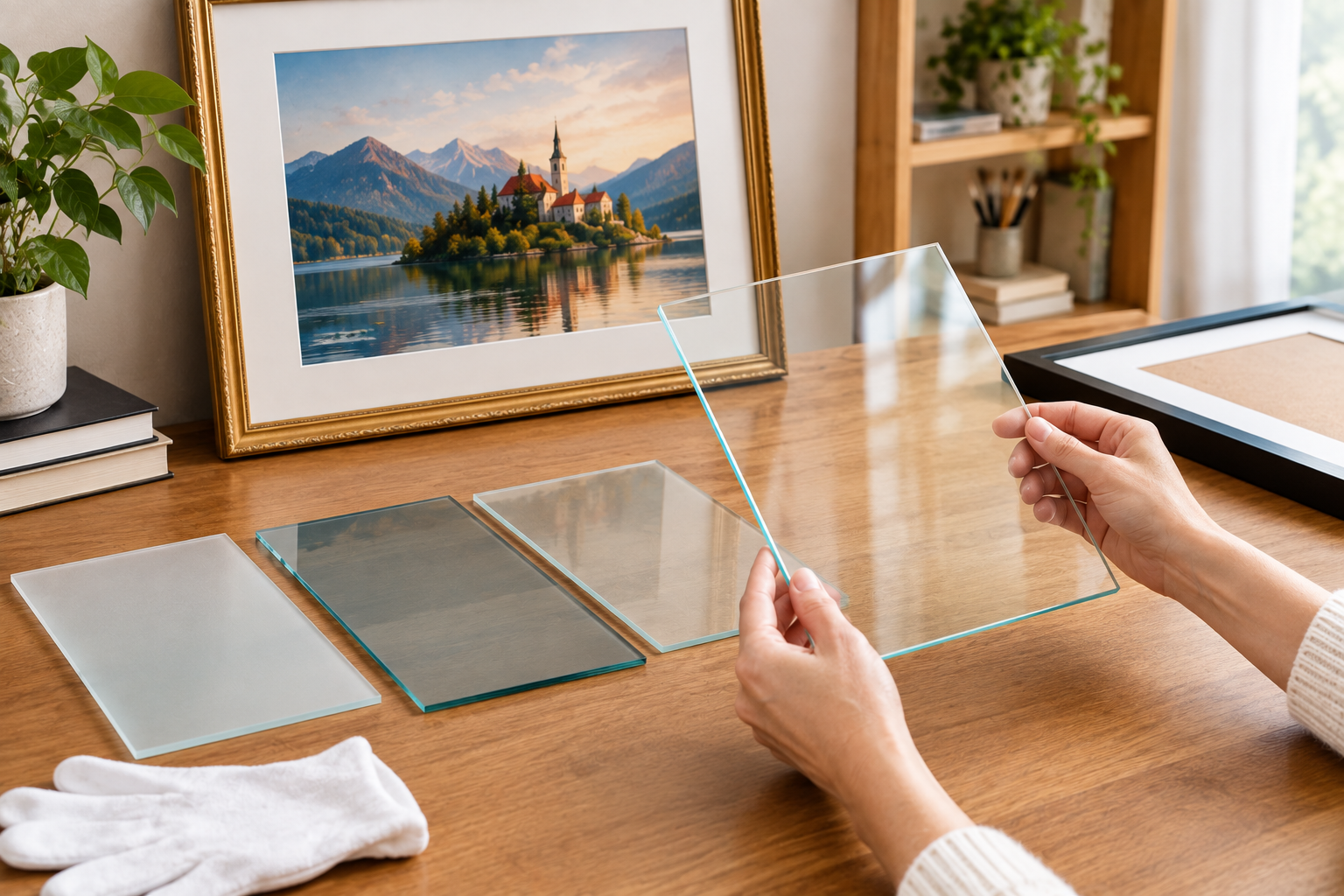
For valuable or sentimental art, museum glass or museum-grade acrylic offers the best protection — typically blocking 99% of UV light with minimal reflection and true colour clarity. Conservation glass is a strong, more affordable alternative blocking around 99% UV with slightly more reflection. Standard UV-protective glass is sufficient for meaningful but replaceable pieces, while basic standard glass suits low-value prints only. Online art framing in Dubai typically offers all these tiers as selectable options, so the right glazing can be matched to the piece's actual value rather than defaulting to whatever's cheapest.
Not every piece of art needs the same level of protection, and that's not a compromise — it's just accurate. A child's first drawing and an original signed print aren't asking the same question of a framer, even though both might feel priceless in their own way. Glass and glazing come in genuine tiers, and matching the right one to what you're actually framing is the real skill here, not simply buying the most expensive option available.
This ranks the real options from basic to museum-grade, what each one actually protects against, and — just as importantly — when the top tier is worth it and when it's spending more for protection you don't need.
Why the Glazing Tier Actually Matters Here
Glass and glazing aren't just about seeing the art clearly — they're the primary defence against the two things that actually destroy valuable pieces over time: ultraviolet light, which fades and degrades pigments and paper, and reflection, which affects both viewing quality and, in cheaper glass, can subtly distort colour perception over years of exposure.
The Glazing Tiers, Ranked
|
TIER 1 |
Standard Glass |
UV protection: Minimal (under 45%) — The baseline — clear, functional, offers little defence against fading.
Best for: Everyday prints, posters, and pieces with no real sentimental or resale value, where replacement is simple and inexpensive.
|
TIER 2 |
UV-Protective Glass |
UV protection: Around 70–75% — A meaningful step up — blocks the majority of fading-causing light at a modest cost increase.
Best for: Family photos, meaningful but replaceable prints, and pieces hanging in moderate natural light.
|
TIER 3 |
Conservation Glass |
UV protection: Around 99% — Near-total UV protection with good clarity, the serious option below museum-grade.
Best for: Sentimental heirlooms, limited edition prints, and valuable pieces that don't yet need full museum-grade treatment.
|
TIER 4 |
Museum Glass / Museum Acrylic |
UV protection: 99%+ — The top tier — near-total UV protection combined with anti-reflective coating for true, glare-free colour clarity.
Best for: Original artwork, investment-grade pieces, irreplaceable heirlooms, and anything intended to last multiple generations.
Technical Comparison at a Glance
|
Glazing Type |
UV Block |
Reflection |
Relative Cost |
|
Standard glass |
Under 45% |
High |
Baseline |
|
UV-protective glass |
~70–75% |
Moderate |
+15–30% |
|
Conservation glass |
~99% |
Low–moderate |
+40–70% |
|
Museum glass / acrylic |
99%+ |
Very low (anti-reflective) |
+80–150% |
Figures are typical industry ranges and vary slightly by manufacturer — confirm exact specifications when ordering.
Matching the Tier to What You're Actually Framing
• A printed poster or decorative print with no sentimental weight — standard glass is genuinely fine
• A meaningful family photo or a print you'd be sad but not devastated to lose — UV-protective glass
• A signed limited edition, a grandparent's original sketch, or a piece with real but not extreme value — conservation glass
• An original painting, a one-of-a-kind heirloom, or anything genuinely irreplaceable — museum glass or museum acrylic, no question
Is Museum Glass Actually Worth It?
Museum glass is the most commonly over-bought and under-bought tier simultaneously — bought unnecessarily for pieces that didn't need it, and skipped for pieces that genuinely deserved it. The honest test: if the piece was lost or destroyed tomorrow, would it be replaceable for roughly the cost of the glazing upgrade? If yes, a lower tier is a reasonable choice. If the answer is no — if no amount of money would get the piece back — museum glass is one of the few framing upgrades that's very rarely regretted afterward.
Why This Matters Even More in Dubai's Climate
UV intensity in the UAE is significantly higher year-round than in many of the markets where general framing advice originates, which means the gap between standard glass and a genuine UV-blocking tier shows up faster here than it would in a milder climate. A piece that might fade noticeably over five years under moderate light elsewhere can show visible change within one or two years near a sun-facing window in a Dubai home. This is part of why conservation or museum-grade glazing is worth taking seriously here specifically, even for pieces that wouldn't necessarily need it in a lower-UV environment.
If a valuable piece must hang somewhere with direct or strong indirect sunlight, treat that placement as a reason to move up a glazing tier rather than compensate with curtains or blinds alone, which reduce but don't eliminate UV exposure over time.
Caring for Higher-Tier Glazing
• Clean with a soft, lint-free cloth — avoid paper towels, which can leave micro-scratches on coated surfaces
• Use a cleaner specifically labelled safe for coated or acrylic glazing, since some standard glass cleaners can degrade anti-reflective coatings over time
• Avoid spraying cleaner directly onto the glazing — apply to the cloth first to prevent liquid seeping behind the frame
• Dust regularly rather than deep-cleaning infrequently, which reduces the need for more aggressive cleaning later
A Common Misconception Worth Addressing
"Museum glass" doesn't mean thicker, heavier, or more fragile glass — the actual glass substrate is often similar in weight to standard glass. What changes is the coating: a specialised anti-reflective and UV-filtering treatment applied to the surface. It's a manufacturing difference, not a physical one, which is also why the price gap reflects the coating process rather than raw material cost.
Ordering the Right Glazing Tier Online
A proper online art framing checkout should present glazing tier as a clear, named choice — standard, UV-protective, conservation, or museum — rather than a single unlabelled "glass" option. Pickframes lists each tier explicitly during online custom framing in Dubai, so matching the glazing to the piece's actual value is a straightforward selection rather than a guess.
1. Assess the piece honestly — replaceable, meaningful, or genuinely irreplaceable
2. Select the matching glazing tier from the options above
3. Choose frame material and archival matting to complete the protection
4. Confirm the itemised price, since higher glazing tiers are usually the largest single cost addition
5. Order your custom art framing for delivery across Dubai and the UAE
Frequently Asked Questions
What is museum glass and is it worth the extra cost?
Museum glass is glazing with a specialised coating that blocks over 99% of UV light and virtually eliminates reflection. It's genuinely worth it for original, irreplaceable, or investment-grade artwork, but often unnecessary for replaceable prints or decorative pieces.
What's the difference between UV-protective glass and conservation glass?
UV-protective glass typically blocks around 70–75% of UV light, while conservation glass blocks closer to 99%. Conservation glass is the stronger choice for genuinely valuable or sentimental pieces, while UV-protective glass suits meaningful but replaceable art.
Does standard glass damage artwork over time?
Standard glass offers minimal UV protection, so artwork behind it — especially anything with ink, dye, or watercolour pigment — can fade noticeably faster than the same piece behind UV-protective or museum-grade glazing.
Is museum acrylic better than museum glass?
Both offer similar UV protection and clarity. Museum acrylic is lighter and more shatter-resistant, making it a strong choice for larger pieces, while museum glass is often preferred for smaller, framed original works.
Can I choose museum-grade glazing through online art framing in Dubai?
Yes. Reputable online custom framing services list glazing tier explicitly as a selectable option, allowing you to choose museum or conservation-grade glazing directly for valuable or sentimental custom art framing.
The best glass for valuable or sentimental art isn't automatically the most expensive tier — it's the tier that matches what would actually be lost if the piece faded or was damaged. Be honest about that value, choose accordingly, and museum-grade glazing becomes an easy yes for the handful of pieces that genuinely deserve it.