
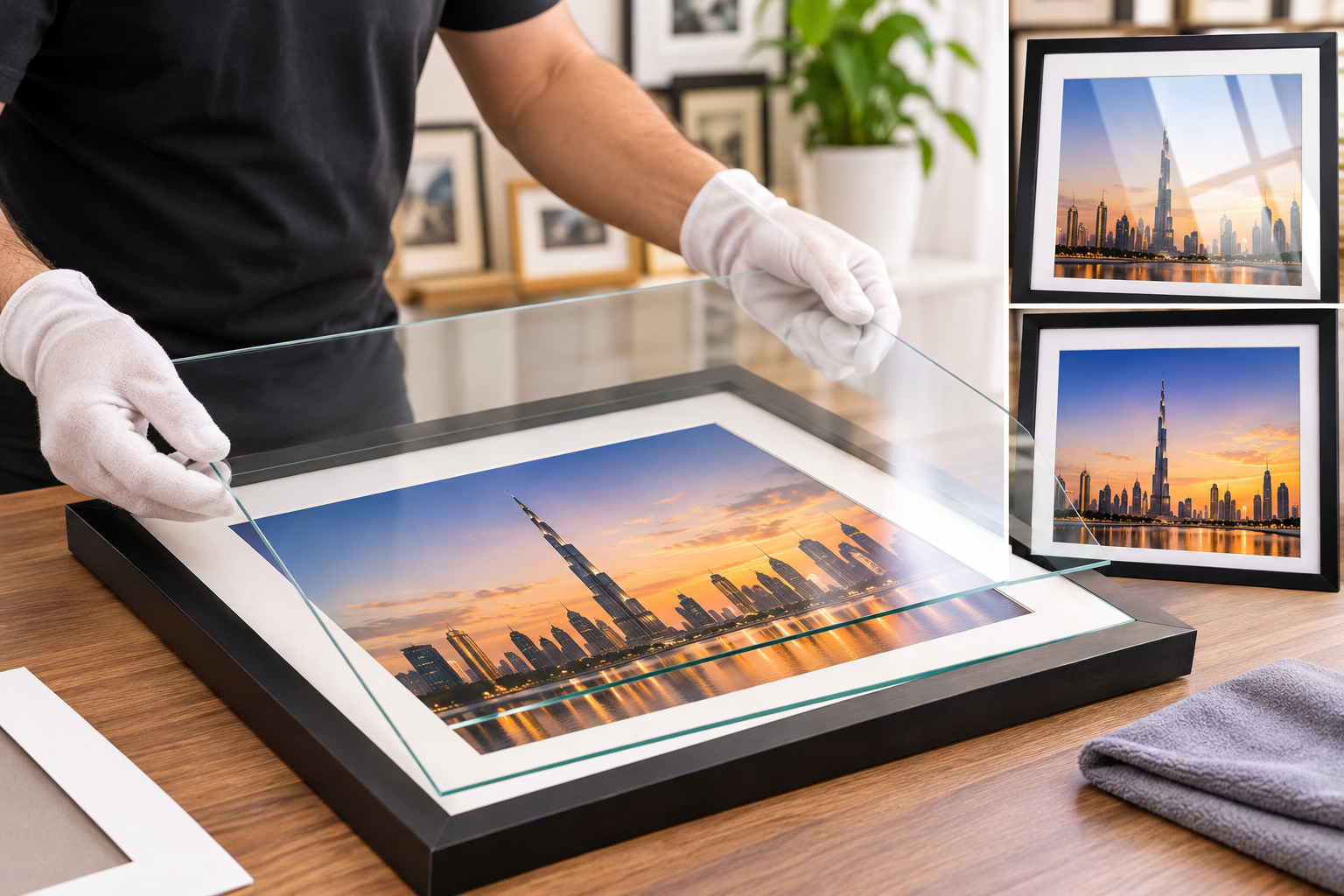
To frame a photo without glare, choose anti-reflective glazing. Standard glass is the cheapest but reflects the most light. Acrylic is lighter and shatter-resistant, so it suits large frames and children’s rooms, though it scratches more easily. Museum glass combines an anti-reflective coating with strong UV protection and gives the clearest, most protective result. For photo framing Dubai homes with big sunny windows, anti-reflective glass or museum glass is usually worth the upgrade.
You hang a beautiful photograph, step back, and see your own reflection and a bright window staring back at you. It is one of the most common complaints in photo framing Dubai homeowners have, because the city has big windows, strong sunlight and glossy modern interiors. The good news is that glare is largely a glazing problem, and it is a solvable one.
This guide explains why frames reflect, compares standard glass, acrylic and museum glass side by side, and shows how to pick the right one for each room. For the bigger picture on choosing frames, see..
Why Framed Photos Glare in the First Place
Glare is reflected light. Any glossy, flat surface in front of your picture acts like a mirror, bouncing light from windows, lamps and spotlights straight into your eyes. Ordinary clear glass typically reflects around 8 percent of the light that hits it, which sounds small until a bright window sits opposite the wall. Then the reflection can be brighter than the photo itself.
Three things decide how bad the glare looks: the type of glazing, where the frame hangs, and how the room is lit. You can only change the glazing when you frame, so it is worth getting right the first time.
Glass vs Acrylic vs Museum Glass: Side-by-Side Comparison
|
Feature |
Standard glass |
Acrylic |
Anti-reflective and museum glass |
|
Glare and reflections |
Highest |
Similar to standard glass |
Greatly reduced |
|
Clarity |
Clear, slight green tint at the edge |
Very clear |
Exceptional, almost invisible |
|
Weight |
Heavy |
Roughly half the weight |
Heavy, like glass |
|
Safety |
Can shatter |
Shatter-resistant |
Can shatter |
|
Scratch resistance |
Good |
Scratches more easily |
Good, but handle with care |
|
Static and dust |
Low |
Attracts dust through static |
Low |
|
UV protection |
Very little |
Available in UV-filtering versions |
Museum grade often blocks around 99 percent |
|
Cost |
Lowest |
Moderate |
Highest |
|
Best for |
Shaded rooms, tight budgets |
Large frames, kids’ rooms, hanging in busy areas |
Bright rooms, treasured prints |
Standard Glass: Affordable but Reflective
Standard clear glass is the default in most ready-made frames. It is smooth, resists scratches well and keeps its clarity for years. For hallways, bedrooms and any wall away from direct light, it does a perfectly good job.
• Pros: lowest cost, hard-wearing, easy to clean.
• Cons: strong reflections, heavy in large sizes and offers little UV protection.
If you are framing a casual snapshot in a shaded corner, there is no need to pay more. For anything facing a window, you will notice the difference.
Anti-Glare vs Anti-Reflective: Not the Same Thing
These two terms are often mixed up, and the difference matters. Anti-glare, sometimes called non-glare or etched glass, has a lightly textured surface that scatters reflections. It cuts the mirror effect, but it can make the picture look slightly soft, especially with fine detail or dark tones.
Anti-reflective glass takes a different approach. A thin coating reduces the amount of light that bounces off the surface, so reflections fade without blurring the image. Good coatings can bring reflections down to well under 1 percent, which is why this type of glass can look almost invisible.
Acrylic: Light, Safe and Practical
Acrylic, often called Perspex or plexiglass, is a clear plastic glazing. It is roughly half the weight of glass and far more shatter-resistant, which makes it the sensible choice for large frames, children’s rooms, rental homes and pieces that may be moved or shipped.
• Pros: lightweight, safer, excellent clarity and available with UV-filtering.
• Cons: scratches more easily, attracts dust through static and needs the right cleaner.
Look after acrylic with a soft microfibre cloth and a cleaner made for plastics. Ammonia-based glass cleaners can cloud the surface over time.
Museum Glass: The Premium Choice
Museum glass is the top tier of picture glazing. It combines a high-performance anti-reflective coating with strong UV filtering, so it both removes glare and protects the print from fading. Used by galleries to display valuable work, it is increasingly popular for wedding portraits, limited-edition prints and anything irreplaceable.
• Pros: minimal reflections, vivid colour and contrast, and long-term protection.
• Cons: the highest price, and it needs gentle handling and the right cleaning method.
The practical rule is simple: the more a photo means to you, and the brighter the wall, the more museum-grade glazing pays for itself.
Photo Framing Dubai: Which Glazing Suits Which Room?
Sunlight is the deciding factor here. Many Dubai apartments have floor-to-ceiling windows, and strong light for much of the year makes both glare and fading real concerns. Use this guide to match glazing to the space.
|
Where it hangs |
Best glazing |
Why |
|
Opposite a large window |
Anti-reflective or museum glass |
Cuts reflections and slows fading |
|
Living room feature wall |
Anti-reflective glass |
Best clarity from any angle |
|
Shaded hallway or bedroom |
Standard glass |
Low light means little glare |
|
Children’s room or stairwell |
Acrylic |
Shatter-resistant and light |
|
Large frames above 24x36 |
Acrylic or anti-reflective |
Easier to hang and handle safely |
|
Irreplaceable portraits |
Museum glass |
Maximum protection and clarity |
How to Reduce Glare Even Without Special Glazing
Glazing is only part of the answer. These simple tricks help whatever you choose.
• Move the frame. Avoid hanging directly opposite a window, and try a side wall instead.
• Control the light. Sheer curtains or blinds soften the brightest hours.
• Aim lighting carefully. A picture light angled at about 30 degrees to the wall reduces reflections.
• Use a mount. It keeps the print slightly away from the glazing, which avoids sticking and distracting marks.
• Choose a matte print finish. Matte and lustre papers show less surface shine than high-gloss.
• Check at eye level. Stand where people will usually see the frame before you fix it.
Cost vs Value: Is Better Glazing Worth It?
Glazing is one of the biggest price differences in picture framing, but it is also one of the biggest differences in the result. A modest upgrade on the frames that matter most is usually better value than upgrading everything. Put anti-reflective or museum glass on the photo that hangs opposite your window, and keep standard glass for frames in quieter corners. For a gallery wall, you can mix glazing types, as long as the frame style stays consistent.
Cleaning and Care Tips
1. Spray the cleaner onto the cloth, never straight onto the glazing, so liquid does not seep under the frame.
2. Use a clean microfibre cloth and wipe gently in one direction.
3. Avoid ammonia on acrylic and on coated anti-reflective surfaces unless the maker says it is safe.
4. Dust regularly, especially in Dubai where fine dust settles quickly.
5. Keep frames out of steamy rooms such as bathrooms and kitchens.
Choosing Glazing When You Order Online
Online photo framing in Dubai makes glazing easy to compare, because you can switch options while you build the frame and watch the preview and total change. With online custom framing in Dubai, check that the service describes each glazing type clearly, and ask about what is included before you pay. Custom frames let you choose the glazing that matches each wall instead of accepting whatever comes in a ready-made frame.
Why Choose PickFrames for Photo Framing in Dubai?
If glare is your main concern, take a look at PickFrames’ Art Glass, an anti-reflective glass designed to cut reflections for clearer viewing. You can start framing your photo online, choose your frame and mount, and check a live preview before you commit. If you are unsure which glazing suits your wall, tell the team where it will hang and what the photo means to you.
Frequently Asked Questions About Frame Glass and Glare
How do I frame a photo without glare?
Choose anti-reflective glazing, avoid hanging the frame directly opposite a window, soften harsh light with curtains, and use a mount to keep the print slightly away from the glazing.
What is the difference between glass, acrylic and museum glass?
Standard glass is the cheapest and reflects the most light. Acrylic is lighter and shatter-resistant but scratches more easily. Museum glass combines an anti-reflective coating with strong UV protection for the clearest, most protective result.
Is anti-reflective glass worth it in Dubai?
Usually yes for bright rooms. Strong sunlight and large windows make reflections and fading common, so anti-reflective or museum-grade glazing helps on walls that get a lot of light.
Is acrylic better than glass for picture frames?
It depends. Acrylic is safer and lighter, which suits large frames and children’s rooms, but it scratches more easily and attracts dust. Glass is harder wearing and often clearer for smaller frames.
Does anti-glare glass blur the photo?
Etched anti-glare glass can soften fine detail slightly. Anti-reflective coated glass reduces reflections without blurring, which is why it is preferred for important prints.
Can I choose the glass for custom framing in Dubai?
Yes. Custom frames let you choose the glazing for each piece, and online photo framing in Dubai lets you compare options and preview the result before ordering.
Glare does not have to spoil a framed photo. Match the glazing to the wall, spend more where light is strongest and where the photo matters most, and use simple placement tricks to help. Choose well, and you will see your picture instead of your reflection, every time you walk past.