
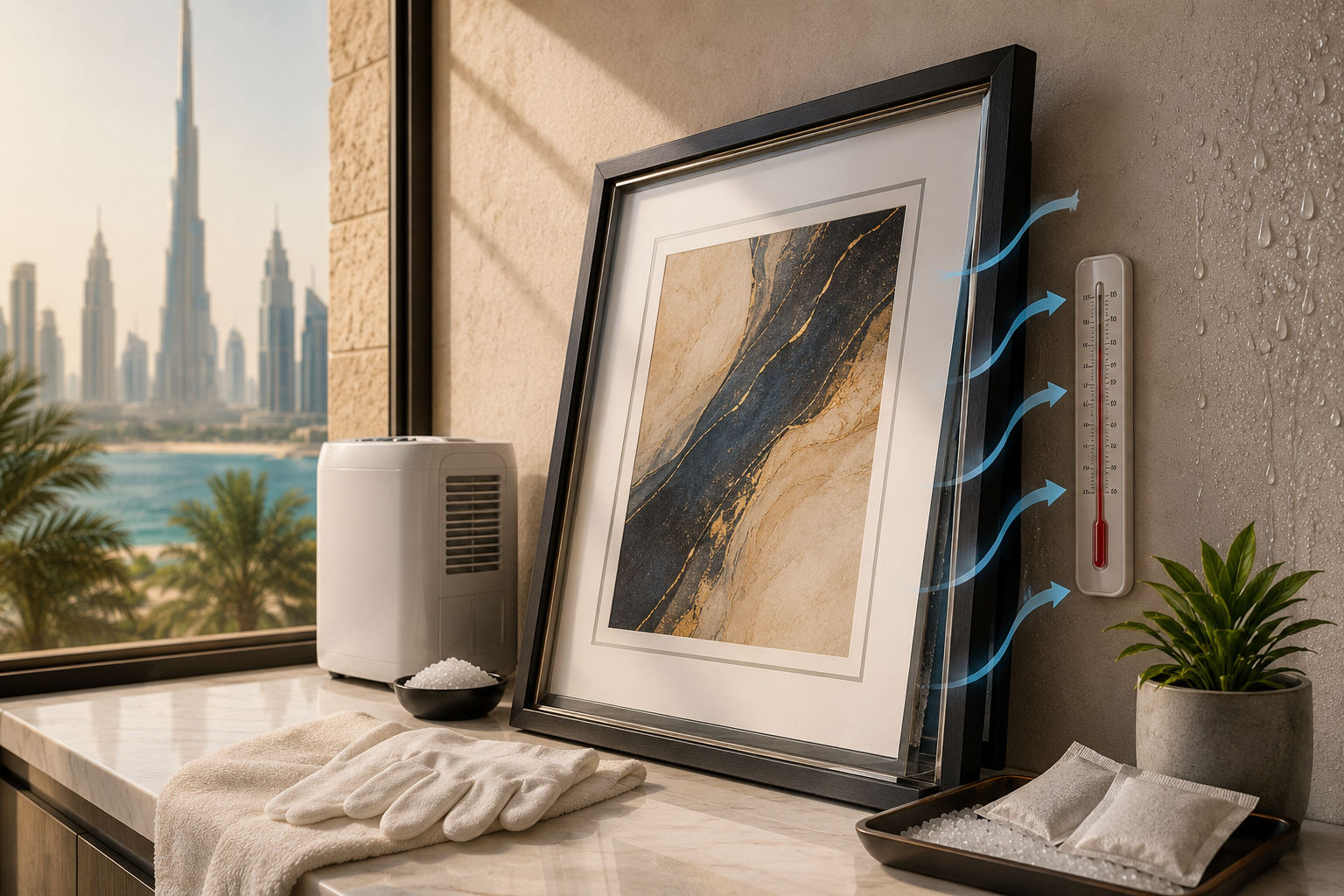
To protect framed art in the UAE, use UV-filtering glass or acrylic, choose humidity-resistant materials like metal or sealed wood, avoid hanging art in direct sunlight or near AC vents, add acid-free matting for airflow, and keep indoor humidity between 40–55%. Rooms with stable air conditioning are safest; entryways, sunrooms, and bathroom-adjacent walls carry the highest risk of warping, fading, and mold.
If you've lived in the UAE for more than one summer, you already know the drill: step outside and the air is thick and heavy, step back into an air-conditioned room and it's suddenly bone-dry and cool. Most of us barely notice the switch. Your framed photos and canvas prints notice every single time.
That daily swing between cold, dry indoor air and hot, humid outdoor air is one of the toughest environments in the world for framed art. Paper absorbs moisture and expands. Wood frames swell and contract. Colors fade faster under UV-heavy sunlight streaming through glass. None of this means you should avoid framed wall art in your home — it means you need to frame and place it correctly from the start. Here's exactly how.
Why UAE Weather Is Especially Hard on Framed Art
Two forces are working against your frames here: heat and humidity, and they don't act alone. Direct sun exposure through a window can push the surface temperature of a frame well above room temperature, accelerating fading and drying out wood finishes. Meanwhile, humidity — especially in coastal cities like Dubai and Abu Dhabi — gets trapped behind glass if a frame isn't sealed or ventilated properly, creating the ideal conditions for mold, foxing (small brown spots on paper), and warped mats.
The good news: almost all of this damage is preventable with the right frame construction, glazing, and placement. None of it requires giving up on framed photos, canvas prints, or gallery walls — it just requires framing that's built for the climate you actually live in, not a generic frame built for a cooler, drier market.
7 Ways to Protect Framed Art From Heat and Humidity
1. Choose UV-Protective Glass or Acrylic Glazing
Standard glass blocks very little UV light, which is the main driver of fading in photos, prints, and posters. UV-filtering glass or acrylic glazing blocks up to 99% of harmful UV rays while still keeping your framed art crystal clear. This single upgrade is often the highest-impact change you can make, especially for pieces near windows or on sun-facing walls.
2. Pick Frame Materials Built for Humidity
Metal picture frames naturally resist warping because they don't absorb moisture the way untreated wood can. If you love the look of wood frames, choose ones with a properly sealed finish, and reserve them for interior walls away from humidity sources. For statement pieces like large canvas wall art, metal or well-sealed wood both work — the key is matching the material to where the piece will actually hang.
3. Avoid Direct Sunlight and AC Vents
Hanging framed wall art directly across from a window that gets afternoon sun is one of the most common mistakes homeowners make. The same goes for placing frames directly in the airflow of an AC vent, which creates constant micro-swings in temperature and humidity right at the frame's surface. Aim for walls that get indirect light and steady airflow instead.
4. Use Acid-Free Matting for Airflow and Preservation
A mat isn't just decorative — it creates a small air gap between the glass and the print, which reduces condensation risk and prevents the print from sticking to the glazing in humid conditions. Acid-free matting also protects photos and prints from yellowing over time, which matters even more in a hot climate where chemical breakdown speeds up.
5. Seal the Frame Backing Properly
A well-sealed backing keeps humidity, dust, and insects out of the frame. Look for (or ask your framer for) a dust cover on the back of every custom picture frame, especially for pieces that will hang in less climate-stable rooms like hallways near entrances.
6. Maintain Stable Indoor Humidity
Where possible, keep indoor humidity in the 40–55% range — comfortable for people and safe for framed art, canvas, and wood furniture alike. If a room is prone to humidity spikes (bathrooms, kitchens, rooms near balconies that are opened often), it's simply not the best spot for a valuable or sentimental framed piece.
7. Rotate and Inspect Pieces Periodically
Even well-protected frames benefit from an occasional check. Twice a year, look behind larger pieces for moisture buildup, check corners for separation, and confirm the glazing hasn't fogged. Catching an issue early is far cheaper than replacing a print or reprinting a canvas.
Where to Hang (and Not Hang) Framed Art in a UAE Home
• Best spots: interior hallways, living room walls away from direct sun, bedrooms with stable AC
• Use caution: walls near frequently-opened balcony doors, sunrooms, entryways exposed to outdoor air
• Avoid: bathrooms, kitchens near stovetops, walls in direct line of an AC vent or a west-facing window with strong afternoon sun
Warning Signs Your Framed Art Is Being Damaged
Catching heat or humidity damage early can save a photo, print, or canvas that's otherwise still recoverable. Here's what to watch for and what it usually means:
|
Warning Sign |
Likely Cause |
What To Do |
|
Wavy or bulging photo/print |
Humidity absorbed through paper or canvas |
Move to a drier room; consider reframing with acrylic glazing |
|
Faded colors near edges |
UV exposure through window glass |
Add UV-filtering glass or acrylic; reposition away from direct sun |
|
Yellowish tint on print |
Heat exposure and non-archival materials |
Reprint with archival inks; switch to acid-free matting |
|
Frame corners separating |
Wood expansion/contraction from humidity swings |
Reinforce joints; move to a stable-climate wall; consider metal frame |
|
Foggy or cloudy glass |
Moisture trapped between glazing and print |
Add spacers/matting for airflow; reseal the frame backing |
|
Musty smell from frame |
Mold or mildew forming behind the print |
Remove immediately, clean or replace matting, improve ventilation |
Protecting Canvas Prints Specifically
Canvas photo prints behave a little differently from framed paper prints, since the canvas itself is stretched over a wooden frame (often called canvas stretching). Humidity can loosen the canvas over time, leading to a slightly saggy or uneven surface. To protect canvas wall art in the UAE, avoid hanging large canvas prints directly above heat sources, keep them out of direct sun to prevent color shift, and consider a protective varnish or laminate finish, which also makes canvas prints easier to wipe clean.
Why Professional Custom Framing Matters More Here
Off-the-shelf frames from general home stores are rarely built with UV glazing, sealed backings, or humidity-appropriate materials as standard. A frame shop that regularly does custom photo framing for the UAE climate will typically build in these protections by default — better glazing options, moisture-resistant backing, and construction that accounts for daily indoor-outdoor temperature swings. If you're framing a wedding photo, a family photo frame, or an investment-worthy canvas print, that difference in build quality is what determines whether it still looks great in five years.
Frequently Asked Questions
What is the best glass for framed art in the UAE?
UV-protective glass or acrylic glazing is the best choice for UAE conditions. It blocks up to 99% of UV rays that cause fading, which matters more here than in cooler, less sun-intensive climates.
Can humidity ruin a canvas print?
Yes, prolonged humidity exposure can loosen canvas stretching, cause slight sagging, and encourage mold if the canvas is kept in a consistently damp or poorly ventilated space. Proper placement and occasional inspection prevent most of this.
Is metal or wood better for humid rooms?
Metal frames generally handle humidity better since they don't absorb moisture the way untreated wood can. For humid or sun-exposed rooms, metal is usually the safer choice; wood is fine in stable, climate-controlled interior spaces.
How often should I check my framed art for damage?
Twice a year is a good baseline — check for corner separation, foggy glass, discoloration, or any musty smell. High-humidity rooms or sun-exposed walls may benefit from more frequent checks.
Does professional framing really make a difference in hot climates?
Yes. Professional custom framing typically includes UV glazing, sealed backing, and climate-appropriate materials as standard, which off-the-shelf frames often skip. This meaningfully extends how long photos, prints, and canvas art stay in good condition.
UAE heat and humidity don’t have to be a reason to avoid framed wall art — they’re simply a reason to frame it properly. UV-protective glazing, humidity-resistant materials, thoughtful placement, and the occasional check-up can help keep your photos, canvas prints, and family memories looking beautiful for years, not just months.
If your existing frames are already showing warning signs, or you’re planning a new gallery wall and want it built to withstand the local climate, it’s worth working with a custom framing service that understands UAE conditions rather than choosing a one-size-fits-all frame shop.
Frame for the Climate. Preserve for a Lifetime.
Visit Pickframes.com — Where Your Memories Meet Expert Craftsmanship.
Protect your photos, celebrate your moments, and frame them beautifully for years to come.