
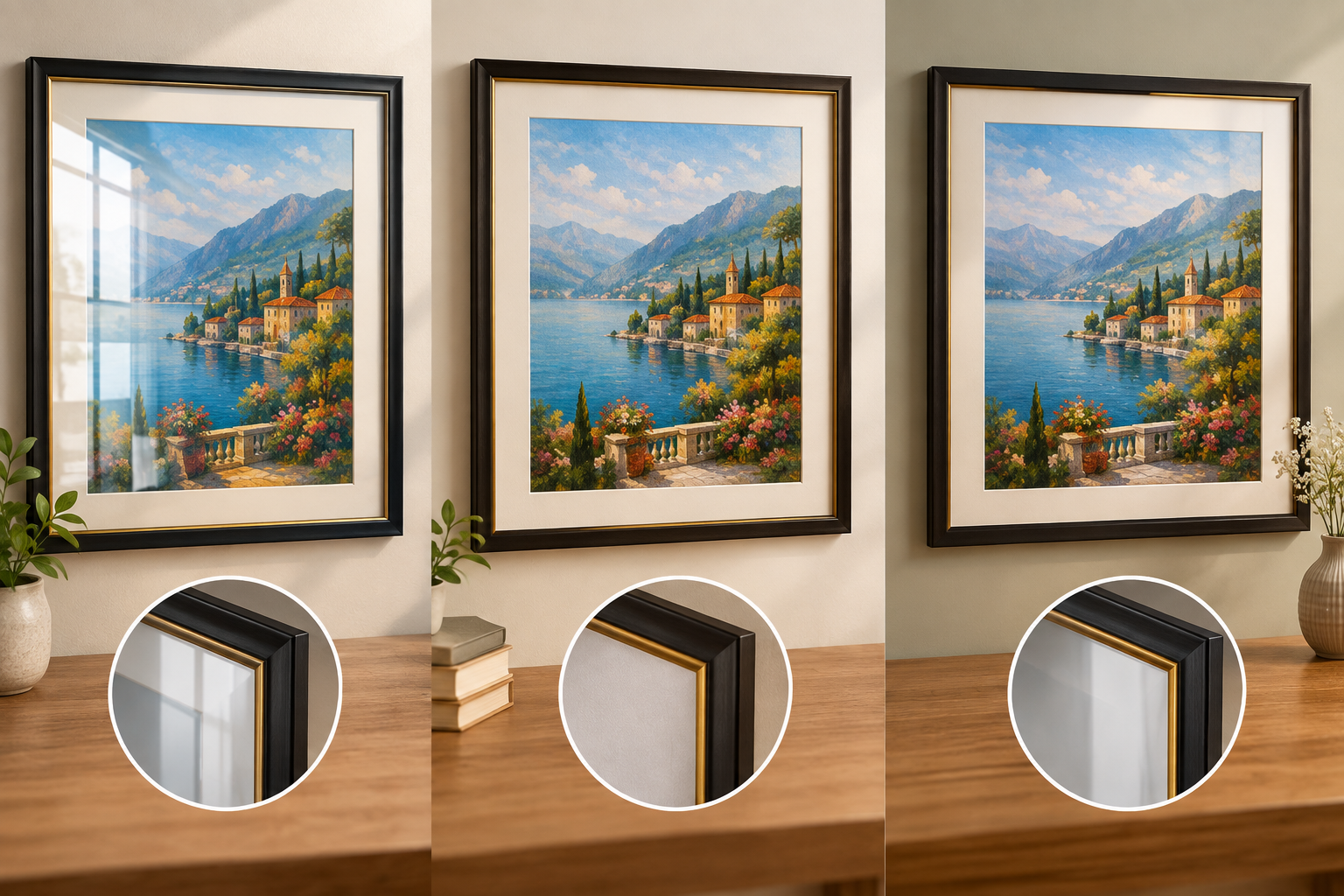
Whether to glaze a painting depends mainly on its medium. Varnished oil and acrylic paintings are traditionally displayed without glass, since the varnish itself provides protection and glazing would trap moisture against the surface. Watercolours, pastels, and unvarnished works need glazing, since the medium itself has no protective layer. Acrylic glazing (not to be confused with acrylic paint) is the practical middle ground for textured paintings that need some protection without flattening against glass. Online art framing in Dubai should let you specify both the painting's medium and the glazing option, since the two decisions are directly linked.
Walk into most galleries and you'll notice oil paintings hanging without glass, while works on paper sit behind it. That's not inconsistency — it's convention built on how each medium actually behaves. The glass-or-not question for a painting isn't really about personal preference at all; it's mostly answered by what the painting is made of.
This goes medium by medium, explains the reasoning gallery framers actually use, and covers the situations where the usual rule gets overridden anyway.
The Traditional Rule, and Why It Exists
Oil and acrylic paint, once properly varnished, form their own protective layer — the varnish is formulated specifically to shield the paint film from dust, UV light, and minor surface contact. Covering a varnished painting with glass adds very little additional protection and introduces a real risk: condensation or trapped humidity between the paint and the glazing, which can cause mould or paint adhesion problems over time, especially in a humid climate.
This is the entire basis for the "no glass on oils" convention seen throughout galleries and auction houses. It isn't tradition for its own sake — it's a genuine material consideration.
By Medium: What Your Painting Actually Needs
|
Oil Painting (varnished) |
NO GLASS RECOMMENDED |
The varnish layer is the protection. Glazing traps moisture against the surface and adds little beyond what varnish already provides. If extra protection is wanted, acrylic glazing with a spacer mat is the safer compromise over standard glass.
|
Acrylic Painting (varnished) |
NO GLASS RECOMMENDED |
Same logic as oil — a properly varnished acrylic painting is self-protecting. Acrylic paint is also more flexible than oil, so it tolerates humidity swings reasonably well once varnished.
|
Watercolour |
GLASS OR ACRYLIC REQUIRED |
Watercolour has no varnish layer and the pigment sits loosely in the paper fibres. It is genuinely fragile to touch, dust, and humidity, and must be glazed with a spacer mat keeping the glazing off the surface entirely.
|
Pastel or Chalk |
GLASS OR ACRYLIC REQUIRED, WITH CARE |
Pastel pigment sits unbound on the surface and can smudge or shed with the slightest contact. Glazing is essential, with a generous spacer mat, since even gentle glazing contact can disturb the medium permanently.
|
Unvarnished Oil or Acrylic |
GLASS OR ACRYLIC RECOMMENDED |
Without varnish, the paint surface has no protective layer at all and behaves more like an exposed medium. Glazing with a spacer mat is the safer choice until the piece can be properly varnished.
|
Mixed Media / Textured / Collage |
DEPENDS ON MATERIALS USED |
Treat each material in the piece by its own rule — varnished paint areas can go unglazed, but any paper, fabric, or unvarnished element usually needs protection. A shadow box with a deep spacer often suits mixed media better than flat glazing.
The Varnish Question, Explained Properly
Varnish status changes everything in this guide, so it's worth checking before deciding anything else. A painting is usually varnished if it has an even, slightly glossy or satin sheen across the whole surface and was finished more than a few weeks ago (varnish typically needs to cure before application). An unvarnished painting often looks slightly duller or uneven in sheen, especially across different colours. If genuinely unsure, treat the piece as unvarnished and glaze it with a spacer mat until it can be properly varnished — the safer default by far.
When Glazing Overrides the Usual Convention
• The painting will hang somewhere with heavy dust exposure, frequent touching, or in a child's room — even a varnished oil benefits from acrylic glazing there
• The piece is being shipped or moved frequently, where glazing adds physical protection against knocks
• The painting is unusually valuable and the owner wants maximum protection regardless of convention
• Local humidity is a genuine concern and the varnish layer is old or showing early wear
None of these situations is wrong to prioritise over the traditional "no glass on oils" rule — they're simply different priorities (practical protection) overriding a convention built around typical conditions.
Acrylic Glazing: The Practical Middle Ground
When a painting does need glazing — watercolour, pastel, unvarnished work, or a varnished piece going somewhere higher-risk — acrylic glazing with a generous spacer mat is usually the better choice over standard glass. It's lighter, won't crack under pressure the way glass can, and the spacer keeps it from ever touching the paint surface directly, which matters even more for textured or impasto work where any contact would flatten the paint's dimensional quality.
Why This Trips Up So Many First-Time Buyers
Most people's instinct, especially coming from a photo-framing background, is that glazing always equals protection and skipping it always equals risk. That instinct is accurate for photographs and prints, which is part of why it gets carried over to paintings incorrectly. A painting is a fundamentally different object: it has its own surface chemistry, its own protective layer in many cases, and its own failure modes that glazing can sometimes make worse rather than better. Unlearning the "more glass is always safer" assumption is the single biggest shift in thinking this guide is asking for.
A Mistake Worth Avoiding
The most common error isn't choosing glass or no glass incorrectly — it's glazing a textured, impasto painting flat against the glass with no spacer at all. This physically crushes raised brushwork against the glazing, flattening exactly the dimensional quality that made the brushwork worth preserving in the first place. If a painting has any surface texture and needs glazing for another reason, a spacer mat isn't optional.
How Online Art Framing Handles Medium-Specific Decisions
This decision genuinely benefits from being made deliberately rather than defaulted. Online art framing in Dubai should let you specify your painting's medium and varnish status, then recommend (or let you directly choose) glass, acrylic, or no glazing with a spacer mat accordingly, rather than applying one glazing default to every piece of custom art framing regardless of what it's made of.
1. Identify your painting's medium and whether it's varnished
2. Apply the medium-specific recommendation above as your starting point
3. Choose acrylic glazing with a spacer mat for anything needing protection without flattening texture
4. Override the default if your situation calls for extra protection regardless of medium
5. Order your custom art framing through online custom framing in Dubai, specifying glazing explicitly
Frequently Asked Questions
Should an oil painting be framed with glass?
Generally no, if the painting is properly varnished. The varnish layer provides protection on its own, and glazing can trap moisture against the surface. Unvarnished oil paintings should be glazed until properly varnished.
Does a watercolour painting need glass?
Yes, always. Watercolour has no protective varnish layer and the pigment is fragile to touch and humidity, so glazing with a spacer mat keeping the glass off the surface is essential.
What's the difference between glass and acrylic glazing for a painting?
Acrylic is lighter, more shatter-resistant, and generally the safer choice for textured or valuable paintings, especially when combined with a spacer mat. Glass remains a fine option for flat, non-textured work that needs glazing.
Can I frame a textured oil painting with glass without damaging it?
Only with a spacer mat holding the glazing away from the surface. Glazing pressed flat against textured or impasto brushwork will crush and flatten it, so a spacer is essential whenever a textured painting is glazed at all.
Can online art framing in Dubai accommodate different painting mediums?
Yes. A properly built online custom framing checkout should let you specify your painting's medium and whether it's varnished, applying the right glazing recommendation — glass, acrylic, or none — rather than a single default for every piece.
The glass, no-glass, or acrylic decision for a painting isn't a style choice — it follows directly from what the painting is made of and whether it's varnished. Match the glazing to the medium using the guide above, add a spacer mat for anything textured that does need glazing, and custom art framing stops being a guess and starts being a decision made for the right reasons.