
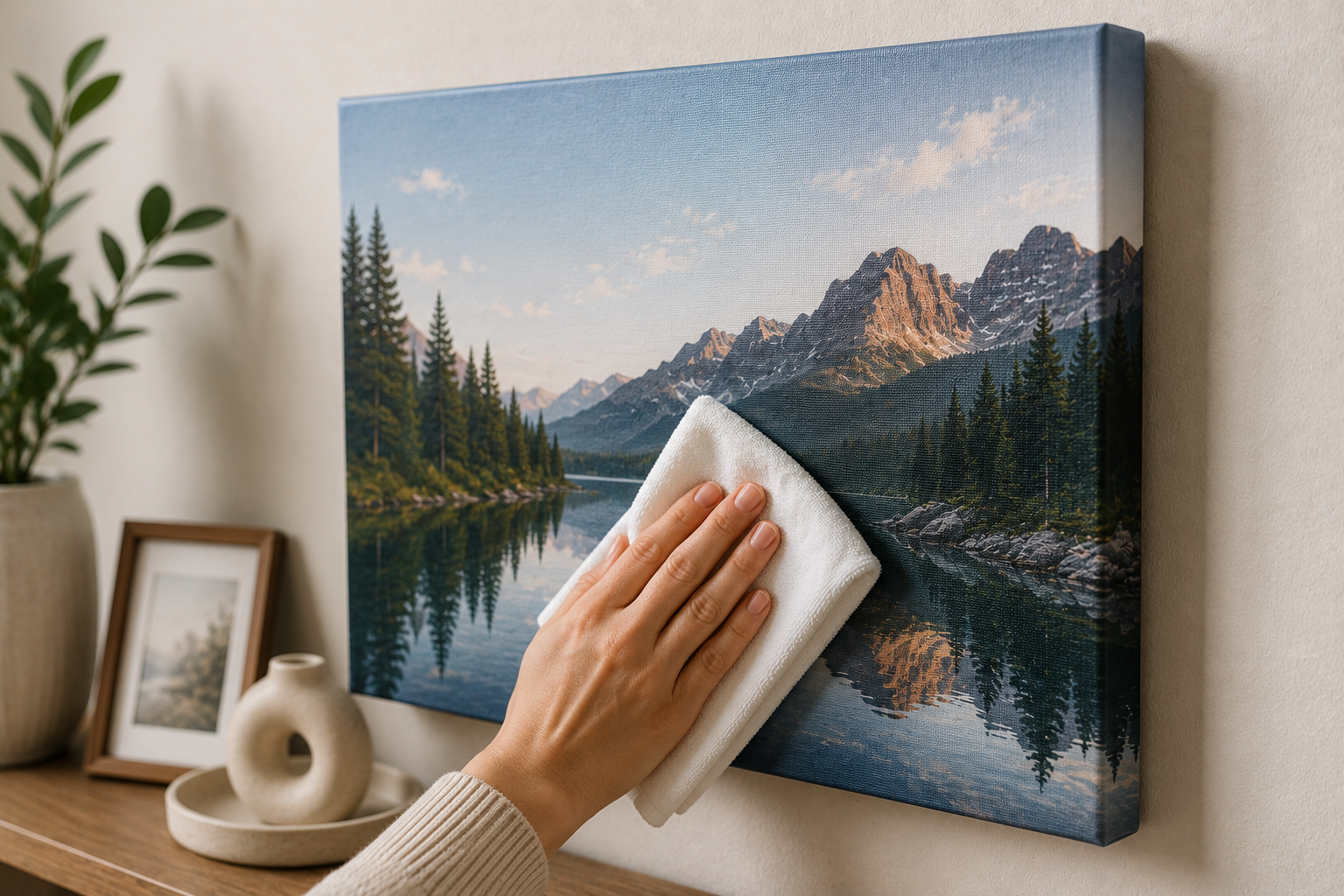
To clean a canvas print safely: gently dust it with a dry, soft microfiber cloth or a soft-bristled brush, always moving in one direction. If a stain remains, lightly dampen (never soak) a cloth with distilled water and blot — don't rub. Avoid glass cleaners, alcohol, ammonia, and direct sunlight, all of which can crack or fade the canvas surface. Let it air-dry fully before rehanging.
If you own a canvas print — whether it's a family portrait, a wedding photo, or a piece of modern canvas art hanging in your living room — you already know how much character it adds to a room. But canvas is a delicate material, and cleaning it the wrong way can crack the surface, fade the ink, or loosen the canvas stretching. In this guide, we'll walk you through the safest way to clean a canvas print at home, the tools you actually need, and the mistakes that quietly ruin canvas wall art every day.
That's the short version — now let's go deeper into why canvas needs special care, and exactly how to do it step by step.
Why Canvas Prints Need Special Cleaning Care
Unlike a framed poster behind glass, a canvas photo print has an exposed, textured surface. The canvas fibers absorb moisture and pressure differently than paper or glass, which means:
• Excess water can seep into the canvas and cause warping or mold
• Rubbing too hard can crack the printed ink layer, especially on older canvas art prints
• Harsh chemicals can strip pigment and dull the colors
• Direct sun exposure over time fades even high-quality canvas printing
This is exactly why generic “screen cleaner” advice you'd use on glass or TVs doesn't apply here. Canvas needs a gentler approach — closer to how you'd care for a painting than a photograph.
What You'll Need Before You Start
Gather these before touching your canvas wall art:
• A soft, lint-free microfiber cloth
• A soft-bristled brush (a clean makeup brush or pastry brush works well)
• Distilled or filtered water (tap water can leave mineral spots)
• A second clean, dry cloth for blotting
• A handheld vacuum with a brush attachment (optional, for large canvas wall art)
Avoid paper towels, rough sponges, and any cloth with texture — these can scratch the print surface.
Step-by-Step: How to Clean a Canvas Print
Step 1: Dust the Surface First
Before any moisture touches the canvas, remove loose dust and debris. Use your soft brush or microfiber cloth and gently sweep across the print in one consistent direction — top to bottom or side to side. Avoid circular motions, which can grind dust particles into the canvas fibers.
For large canvas wall art or gallery wall frames, a handheld vacuum on the lowest suction setting with a brush attachment makes this step faster and more even.
Step 2: Check for Stains or Marks
Most canvas prints only need dry dusting. If there's a visible mark, smudge, or stain, move to the next step — but only treat the specific spot, not the entire print.
Step 3: Lightly Dampen (Never Soak) a Cloth
Dip a clean microfiber cloth in distilled water and wring it out thoroughly until it's barely damp — almost dry to the touch. Excess moisture is the single biggest cause of long-term damage to canvas photo prints and custom canvas prints.
Step 4: Blot, Don't Rub
Gently blot the stained area. Never scrub or rub in circles — this can smear ink and damage the printed surface permanently, especially on custom photo frames with canvas inserts.
Step 5: Air-Dry Completely Before Rehanging
Lay the canvas flat or lean it upright in a well-ventilated room away from direct sunlight or heaters. Let it dry fully — usually a few hours — before rehanging.
Step 6: Dust Regularly to Reduce Deep Cleaning
The best way to avoid ever needing a deep clean is light, regular dusting — once every two to three weeks — especially for framed canvas prints displayed near kitchens or high-traffic areas.
Cleaning Framed vs. Unframed Canvas Prints
Framed canvas prints: Wipe the frame separately with a dry cloth first, then clean the canvas itself using the steps above. Never let cleaning liquid drip onto the frame joints, as moisture can warp wood or loosen wall frame corners over time.
Unframed / gallery-wrapped canvas: Since the edges are exposed, be extra careful around the wooden stretcher bars underneath. Avoid pressing down hard near the edges, as this is where canvas stretching tension is most vulnerable.
Large canvas wall art: For big statement pieces, clean in sections rather than trying to do the whole piece at once — this gives you better control and reduces the risk of uneven moisture spread.
Common Mistakes That Damage Canvas Prints
• Using glass cleaner or alcohol-based wipes — these strip pigment and can dull modern canvas art almost instantly
• Spraying water or cleaner directly onto the canvas — always apply to the cloth first, never the print
• Hanging near direct sunlight or humidity (bathrooms, kitchens) — accelerates fading and warping
• Rubbing stains aggressively — this cracks the ink layer, especially on older photo canvas prints
• Skipping regular dusting — dust buildup becomes much harder to remove over time and can permanently dull the surface
How Often Should You Clean a Canvas Print?
• Light dusting: every 2–3 weeks
• Deep spot-cleaning: only when needed, not on a schedule
• Full inspection: every 6 months, checking for fading, frame looseness, or canvas sagging
Canvas prints in kitchens, hallways, or near windows generally need more frequent dusting due to grease, dust traffic, or sun exposure.
When to Get Professional Help
If a canvas print has deep staining, mold, sagging, or a torn corner, it's safer to consult a professional rather than risk permanent damage with DIY cleaning. At Pickframes, we also offer canvas stretching, re-framing, and restoration services if your canvas art prints need more than a simple clean — along with custom canvas prints, framed canvas prints, and photo framing services if you're ready to print and frame new memories.
If you're in the UAE, our canvas printing Dubai and canvas printing Abu Dhabi services also cover custom framing, mirror framing, and picture framing near you — whether it's a wedding photo frame, an anniversary photo frame, or a full gallery wall frame set.
Cleaning a canvas print doesn't need to be complicated — it just needs a gentler touch than you'd use on glass or paper. Dry dust often, use minimal moisture only when necessary, blot instead of rub, and keep your canvas wall art away from direct sunlight and humidity. With the right care, a well-made canvas photo print or framed canvas print can easily last decades without losing its color or texture.
Cleaning a canvas print doesn’t need to be complicated — it just needs a gentler touch than you’d use on glass or paper. Dust it regularly with a soft, dry cloth, use minimal moisture only when necessary, blot instead of rubbing, and keep your canvas wall art away from direct sunlight and excessive humidity.
With the right care, a well-made canvas photo print or framed canvas print can last for decades while preserving its color, texture, and character.
Visit Pickframes.com — Protect Your Memories. Preserve Them Beautifully.
Frequently Asked Questions
Can I use water to clean a canvas print?
Yes, but only a very lightly damp cloth with distilled water for spot cleaning. Never soak or spray water directly onto the canvas, as excess moisture can cause warping or mold.
Can I use a magic eraser or wipes on a canvas print?
No. Magic erasers and chemical wipes are too abrasive for canvas fibers and can strip both the print and the protective coating, leaving permanent dull patches.
How do I remove a stain from a canvas print?
Lightly dampen a microfiber cloth with distilled water, then gently blot the stained area — never rub. If the stain remains, it's best to consult a professional framer.
Can direct sunlight damage a canvas print?
Yes. Prolonged direct sunlight fades ink pigments and can dry out the canvas material over time. Hang canvas wall art away from windows that get direct afternoon sun.
How often should I dust my canvas print?
Every two to three weeks for most homes, and more frequently in kitchens or high-traffic areas where dust and grease build up faster.
Is it safe to vacuum a canvas print?
Yes, using a handheld vacuum on the lowest suction setting with a soft brush attachment is safe for large canvas wall art, as long as you keep the nozzle a small distance from the surface.
What's the safest cloth to clean a canvas print with?
A soft, lint-free microfiber cloth is best. Avoid paper towels, rough sponges, or textured fabrics, which can scratch the printed surface.
Can I clean a framed canvas print the same way as an unframed one?
Mostly yes, but clean the frame separately with a dry cloth first, and avoid letting any moisture drip into the frame joints or corners.
Should I clean my canvas print before or after reframing it?
Always clean it before reframing so dust or debris isn't sealed in behind new framing materials.
Where can I get a damaged canvas print restored or reframed?
Pickframes offers canvas stretching, custom framing, and restoration services both online and in-store, including custom framing in Dubai, Abu Dhabi, and Sharjah.