
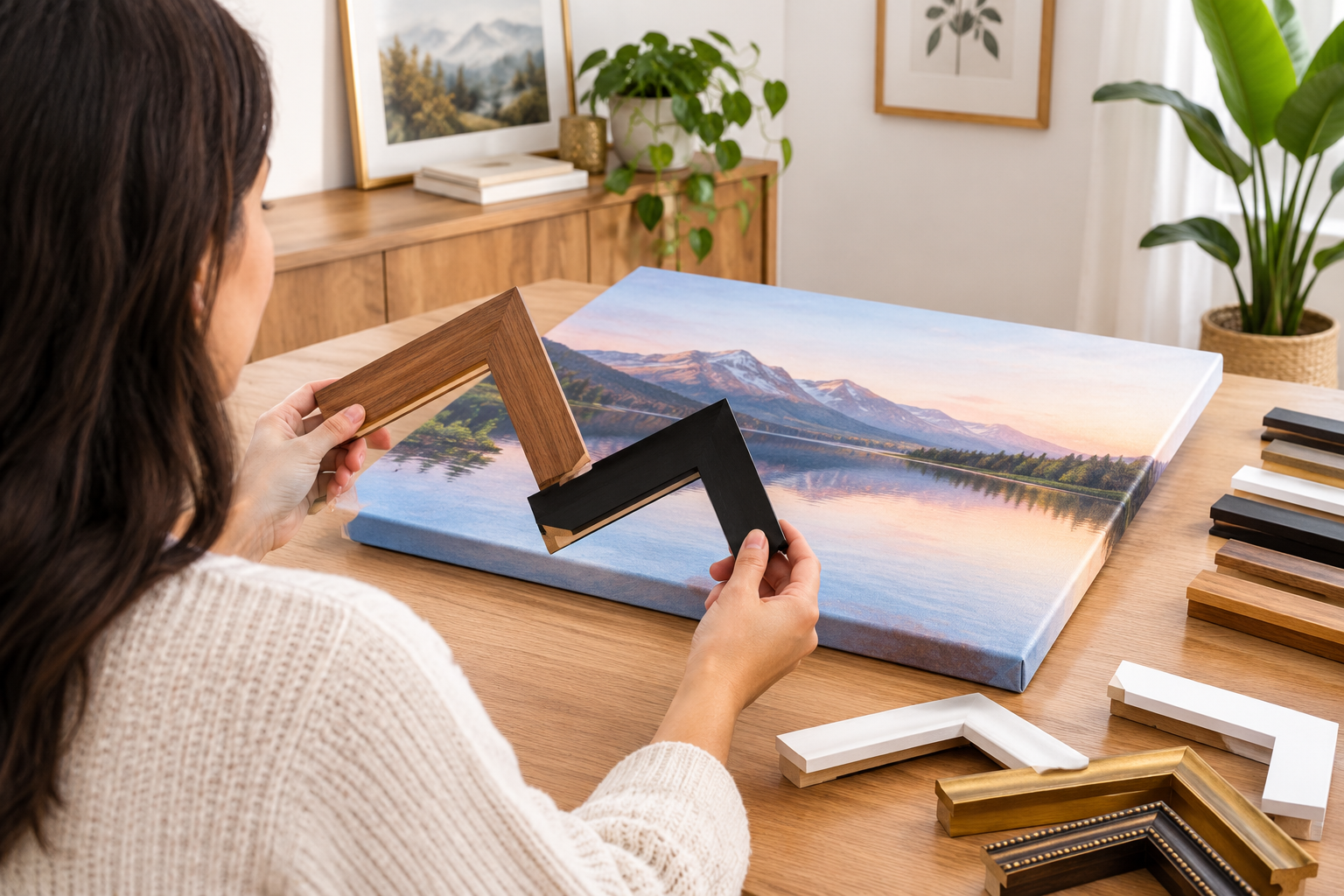
To choose the right frame for a canvas, first decide whether it needs a frame at all (many don't), then choose float framing for a modern look with a finished edge or traditional framing for a classical look or an unfinished edge, match the frame style to the canvas's genre (minimalist, landscape, abstract, pop art), pick a colour that complements rather than competes with the piece, and confirm the stretcher bar depth matches the frame's rabbet depth. Online canvas framing in Dubai typically lets you work through these choices against your actual canvas before ordering.
A canvas is unusual among wall art in that it arrives already finished — stretched, taut, ready to hang with nothing else required. That freedom is exactly what makes the framing decision harder rather than easier: there's no default to fall back on, just a genuine, open choice about whether to add anything at all, and if so, what.
Five steps, in order, take you from a blank stretched canvas to a frame decision that actually suits the piece rather than whatever was closest on the shelf.
|
STEP 1 |
Decide If You're Framing It At All |
A stretched canvas is already a complete, self-supporting object — framing is a genuine aesthetic choice here, not a structural requirement the way glazing is for a paper print. Leave it unframed for a modern, gallery-style look that shows off the canvas edge directly. Add a frame if the room is more traditional, if the canvas edge isn't finished well enough to show, or if you simply prefer the more complete, bordered look a frame gives.
|
STEP 2 |
Float or Traditional, If You're Framing |
If you've decided to frame it, this is the next fork. As a quick rule of thumb:
|
Your Canvas Has... |
Choose |
|
A clean, finished, or painted edge |
Float frame |
|
Staples or an unfinished edge showing |
Traditional frame |
🔗 Suggested internal link: link "float frame" above to a dedicated Float vs Traditional Frame guide for the full comparison.
|
STEP 3 |
Match Frame Style to Your Canvas's Genre |
This is the step most canvas framing advice skips, and it's where the real difference between "a frame" and "the right frame" shows up.
Abstract or Minimalist Canvas
Frame style: Thin float frame or no frame at all — let the composition breathe without visual competition
Colour note: Black, white, or raw wood; avoid anything ornate or heavily detailed
Landscape or Nature Scene
Frame style: Traditional frame with moderate width, or a float frame if the piece has a contemporary painting style
Colour note: Natural wood tones that echo the scene's own palette work especially well here
Portrait or Figurative Painting
Frame style: Traditional frame with some presence — this genre tends to suit a frame that visually completes the piece
Colour note: Match frame tone to the painting's dominant skin and clothing tones rather than the room
Pop Art or Bold Graphic Canvas
Frame style: Simple, clean float or thin traditional frame — the art itself carries the boldness, the frame shouldn't compete
Colour note: Black or white reads cleanest; avoid introducing a third strong colour via the frame
Black-and-White or Monochrome Canvas
Frame style: Float frame for a modern feel, or a black traditional frame for a bolder, more defined look
Colour note: Match the frame's undertone to the image's warm or cool cast — a mismatch reads subtly off
Pattern or Geometric Canvas
Frame style: Thin, simple frame in a single flat colour, usually float-style to keep the geometry uninterrupted
Colour note: Pull one colour directly from the pattern rather than introducing a new one
|
STEP 4 |
Choose a Colour That Complements, Not Competes |
Beyond the genre-specific notes above, two reliable approaches work across any canvas:
• Pull a frame tone directly from a colour already present in the canvas, for a cohesive, intentional look
• Choose a neutral (black, white, or natural wood) that lets the canvas carry all the colour on its own
• Avoid introducing a bold new colour via the frame that doesn't appear anywhere in the piece itself
|
STEP 5 |
Check the Practical Fit: Stretcher Depth and Frame Rabbet |
This is a genuinely canvas-specific technical detail that trips up more orders than it should. A frame's rabbet (the inner groove that holds whatever sits inside it) needs to be deep enough to accommodate the canvas's stretcher bar depth, especially for traditional frames that enclose the canvas rather than floating around it. A canvas stretched on deep gallery bars (around 1.5 inches) won't fit into a shallow traditional frame moulding built for flat prints. Always confirm bar depth and frame rabbet depth match before ordering, particularly if the canvas and frame are being sourced separately.
A Full Example, Start to Finish
A 24x30 abstract canvas, mostly deep blue and warm ochre tones, going into a modern living room with light wood furniture.
1. Framing decision: Yes, a light frame to anchor it against a plain wall
2. Float or traditional: Float, since the canvas has a clean painted edge
3. Genre match: Abstract — thin profile, minimal presence
4. Colour: Light natural wood, pulled from the room's existing furniture rather than the canvas itself, since neutral works better than competing with the ochre
5. Practical check: Gallery-depth stretcher bars confirmed to match the float frame's rabbet depth
What If You're Framing Several Canvases Together?
The five-step process above works for a single canvas, but a canvas gallery wall or a matched set across a room needs one more consideration layered on top: consistency. Rather than applying the genre-matching step individually to each piece, choose one dominant frame style and colour for the whole group, then let genre differences show up in smaller details — a slightly wider mat for a portrait piece, a thinner profile for an abstract one — rather than switching frame families entirely between pieces. A room with five canvases in five unrelated frame styles reads as accidental, even when every individual choice was reasonable on its own.
Common Mistakes to Avoid
• Framing a canvas by default without considering whether it needs one at all
• Choosing a float frame without checking the canvas edge is actually presentable
• Picking frame colour to match the wall instead of the canvas itself
• Ordering a traditional frame without confirming stretcher bar depth fits the rabbet
• Using the same frame style across every canvas in a room regardless of genre, producing a mismatched rather than cohesive look
How Online Canvas Framing in Dubai Supports This Decision
Working through five steps is easiest when you can see the result against your actual canvas rather than imagining it. Online canvas framing in Dubai should let you preview float and traditional options, frame colours, and sizing against your uploaded canvas image before committing, turning this guide into a practical checkout process rather than a mental exercise.
6. Decide whether to frame at all
7. Choose float or traditional based on your canvas's edge
8. Match frame style to the canvas's genre using the guide above
9. Select a colour that complements the piece
10. Confirm stretcher depth and frame rabbet compatibility, then order online canvas framing in Dubai for delivery
Frequently Asked Questions
Do all canvas paintings need a frame?
No. A properly stretched canvas is self-supporting and can be displayed unframed. Framing is an aesthetic choice, useful for a more traditional room or a more finished look, but not a structural requirement.
How do I match a frame to my canvas's art style?
Match frame simplicity to the canvas's own boldness — minimalist and abstract canvases suit thin, quiet frames, while portraits and classical scenes suit frames with more presence and traditional detailing.
Why does stretcher bar depth matter when choosing a canvas frame?
A traditional frame's inner rabbet needs to be deep enough to hold the canvas's stretcher bars. Deep gallery-style bars won't fit a shallow frame built for flat prints, so depth should always be confirmed before ordering.
What frame colour works best for a colourful abstract canvas?
A neutral tone — black, white, or natural wood — usually works best, letting the canvas carry the colour. Alternatively, pulling one specific tone directly from the painting keeps the pairing cohesive.
Can I preview frame options against my canvas before ordering online canvas framing in Dubai?
Yes. Reputable online canvas framing services let you upload your canvas image and preview float or traditional frame options, along with colour choices, before confirming your order.
Choosing the right frame for a canvas comes down to five decisions made in order: whether to frame it at all, float or traditional, matching the genre, choosing a complementary colour, and confirming the practical fit. Work through them in that sequence and online canvas framing in Dubai turns from a guessing game into a deliberate, confident choice.