
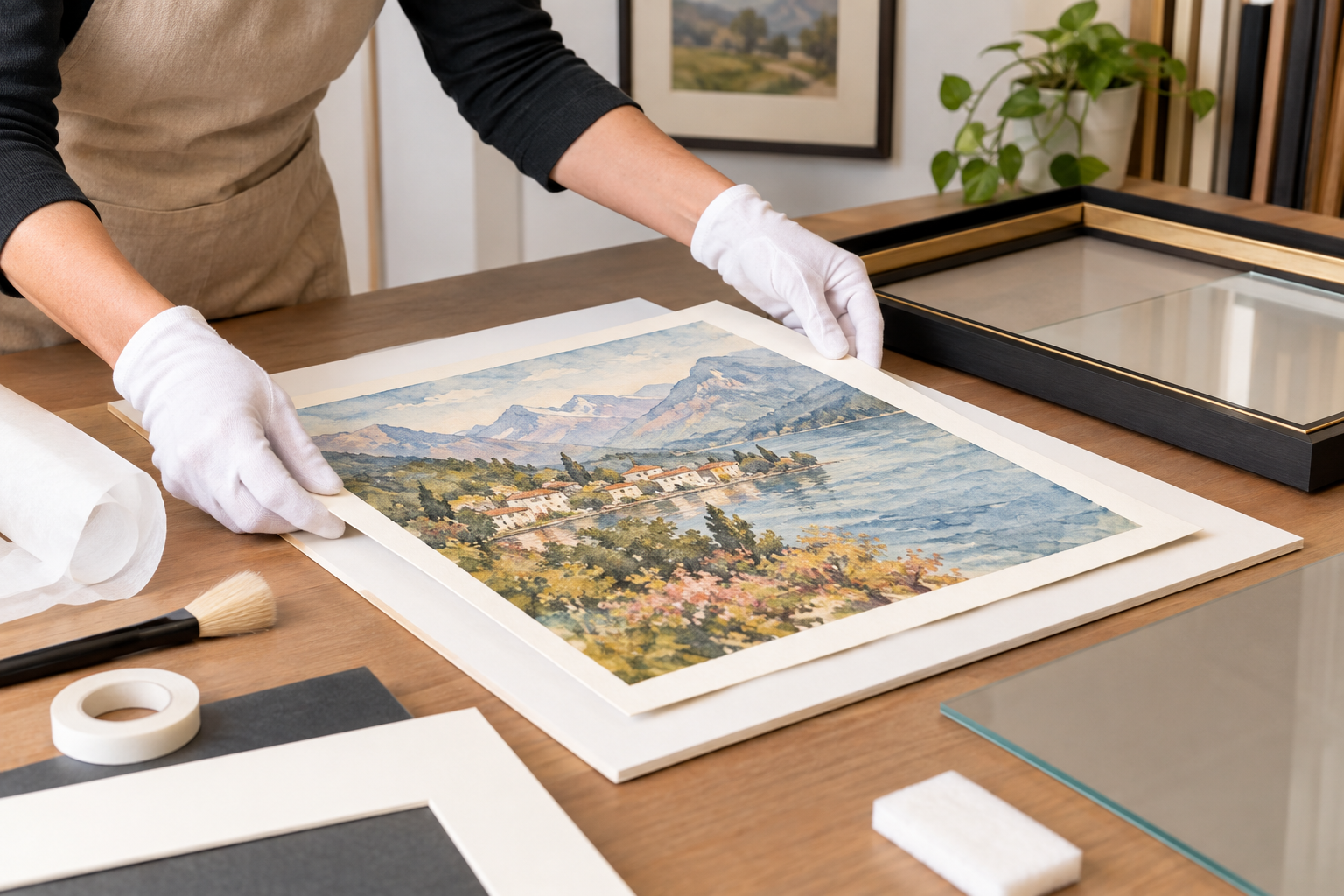
To frame artwork without damaging it, use acid-free, archival matting and mounting materials, avoid adhesive tape or glue directly on the artwork, keep glazing from touching the surface (using a spacer mat or float mount), and choose UV-protective glazing to prevent fading. Reputable online art framing services use these archival standards by default, so ask specifically whether matting, mounting, and glazing are archival-grade before ordering custom art framing for anything valuable or irreplaceable.
Here's the uncomfortable truth: framing is one of the more common ways artwork gets damaged, not protected. Not through anything dramatic — no dropped glass, no torn canvas — but slowly, invisibly, through the wrong tape, the wrong mat board, or glazing pressed directly against a painted surface. By the time it's visible, the damage is usually already done.
None of this requires a conservation degree to avoid. It requires knowing what actually causes the damage, and asking for the right materials by name. Here's the complete picture.
The Four Ways Artwork Actually Gets Damaged
Almost every framing-related damage case traces back to one of these four causes.
⚠ Acidic Materials Touching the Artwork
What causes it: Standard, non-archival mat board and backing board contain acids that migrate into paper and canvas over time, causing yellowing, browning, and brittleness — sometimes called "mat burn."
How to prevent it: Insist on acid-free, archival-quality (lignin-free) matting and backing board. It costs modestly more upfront and prevents damage that's often impossible to reverse later.
⚠ Glazing Pressed Directly Against the Surface
What causes it: When glass or acrylic sits flush against a painting or textured piece, moisture can become trapped between them, and paint or media can stick to the glazing over time — especially in humid conditions.
How to prevent it: Use a spacer mat, mat border, or float mount to create an air gap between the artwork and the glazing, so the surface never makes direct contact.
⚠ Tape, Glue, or Adhesive Applied Directly to the Art
What causes it: Pressure-sensitive tape and standard glue degrade over time, can stain the artwork permanently, and are often impossible to remove without damaging the surface further.
How to prevent it: Use reversible, archival mounting methods — photo corners, hinging with archival tape on the back only, or a proper mount board — never adhesive directly on the visible surface.
⚠ UV Exposure From Unprotected Glazing
What causes it: Standard glass blocks very little UV light. Artwork hung near a window or under strong indoor lighting can fade or discolour noticeably within a year or two, especially watercolours and dyed prints.
How to prevent it: Choose UV-protective or museum-grade glazing for anything hanging in natural light, and avoid placing valuable pieces in direct sun regardless of glazing.
Archival Materials Glossary
A few terms worth knowing so you can ask for them by name when ordering art framing:
|
Term |
What It Means |
|
Acid-free / archival matting |
Mat board made without acidic components that would otherwise yellow and damage the artwork over time |
|
Lignin-free |
Free of a wood-based compound that breaks down and discolours paper over years |
|
Spacer mat / float mount |
A technique that holds glazing away from the artwork's surface to prevent direct contact |
|
UV-protective glazing |
Glass or acrylic treated to filter out ultraviolet light that causes fading |
|
Reversible mounting |
Any mounting method that can be fully undone without damaging the artwork, such as photo corners or hinging tape |
Do This, Not That
|
Do This |
Not That |
|
Acid-free, archival matting and backing board |
Standard supermarket mat board or cardboard backing |
|
Photo corners or archival hinging tape on the back |
Tape, glue, or adhesive applied to the artwork's front or edges |
|
Spacer mat or float mount to keep glazing off the surface |
Glazing pressed flush against a painted or textured piece |
|
UV-protective glazing for anything near natural light |
Standard glass for valuable or colour-sensitive artwork |
|
Asking your framer directly whether materials are archival-grade |
Assuming "custom framing" automatically means archival-safe |
A Safe Framing Process, Step by Step
1. Handle the artwork by its edges only, with clean, dry hands
2. Choose acid-free matting and backing board before anything else
3. Select a reversible mounting method suited to the piece — photo corners or archival hinging, never permanent adhesive
4. Add a spacer mat or float mount if the piece has texture, paint, or is otherwise sensitive to contact
5. Choose UV-protective glazing, especially for anything that will hang near a window
6. Confirm every material choice before the order is finalised, rather than assuming standard defaults are archival
A Climate Note Specific to Dubai Homes
Indoor climate control adds its own wrinkle here. Constant air conditioning keeps humidity low most of the year, but the swing between a cold, dry interior and a hot, humid exterior can stress artwork placed near doors, windows, or vents — expanding and contracting paper, canvas, and wood mouldings slightly over time. This isn't usually dramatic, but it's part of why a proper air gap (via spacer mat or float mount) and stable, quality framing materials matter more here than in a milder, more consistent climate.
Avoid hanging valuable or original pieces directly above air conditioning vents or in spots that catch direct afternoon sun through a window — both accelerate the very damage this guide is trying to help you prevent.
When to Consider Conservation-Grade Framing Specifically
Every recommendation above applies broadly, but a few situations call for going further — full conservation-grade framing, which uses museum glass, 100% cotton rag mats, and completely reversible mounting throughout:
• Original paintings or one-of-a-kind pieces that can't be replaced
• Limited edition or numbered prints with resale or appreciating value
• Family heirlooms, historical documents, or sentimental irreplaceable pieces
• Artwork already showing early signs of ageing or fragility
For anything in these categories, it's worth explicitly requesting conservation-grade materials rather than assuming standard "custom framing" covers it — the two aren't always the same thing.
Why Online Art Framing Can Still Be Archive-Safe
A reasonable worry with online custom framing in Dubai is whether archival standards get skipped without an in-person conversation to confirm them. In practice, a properly built online art framing process lets you select archival matting, spacer mounting, and UV-protective glazing explicitly as options — the same specifications a conservation framer would recommend in person, just chosen directly rather than discussed across a counter.
Pickframes offers these archival options as standard choices within its online custom framing process, so protecting a valuable piece doesn't require a special in-person consultation — just selecting the right materials at checkout.
Frequently Asked Questions
What is the safest way to mount artwork in a frame?
Reversible methods like photo corners or archival hinging tape applied only to the back of the piece are safest, since they avoid permanent adhesive contact with the artwork's surface and can be fully undone without damage.
Does glass touching a painting actually cause damage?
Yes. Direct contact can trap moisture and cause paint or media to stick to the glazing over time, particularly in humid conditions. A spacer mat or float mount prevents this by keeping a small air gap between the artwork and the glass.
Why does mat board need to be acid-free?
Standard mat board contains acids that migrate into the artwork over years, causing yellowing, browning, and brittleness known as mat burn. Acid-free, archival matting prevents this ongoing chemical damage.
Is UV-protective glazing necessary for all artwork?
It's most important for pieces that will hang in natural or strong indoor light, especially watercolours and dyed prints, which fade faster than oil paintings or pigment-based prints.
Can I request archival, conservation-grade materials with online art framing in Dubai?
Yes. Reputable online art framing services let you select acid-free matting, spacer mounting, and UV-protective glazing directly during the ordering process, giving you the same archival protection a conservation framer would recommend.
Damage during framing almost always comes down to one of four preventable causes — acidic materials, direct glazing contact, permanent adhesive, or unfiltered UV light. Ask for archival matting, reversible mounting, and UV-protective glazing by name, whether you're ordering in person or through online custom framing, and the artwork you're protecting today stays protected for decades, not just until the next time the light hits it wrong.