
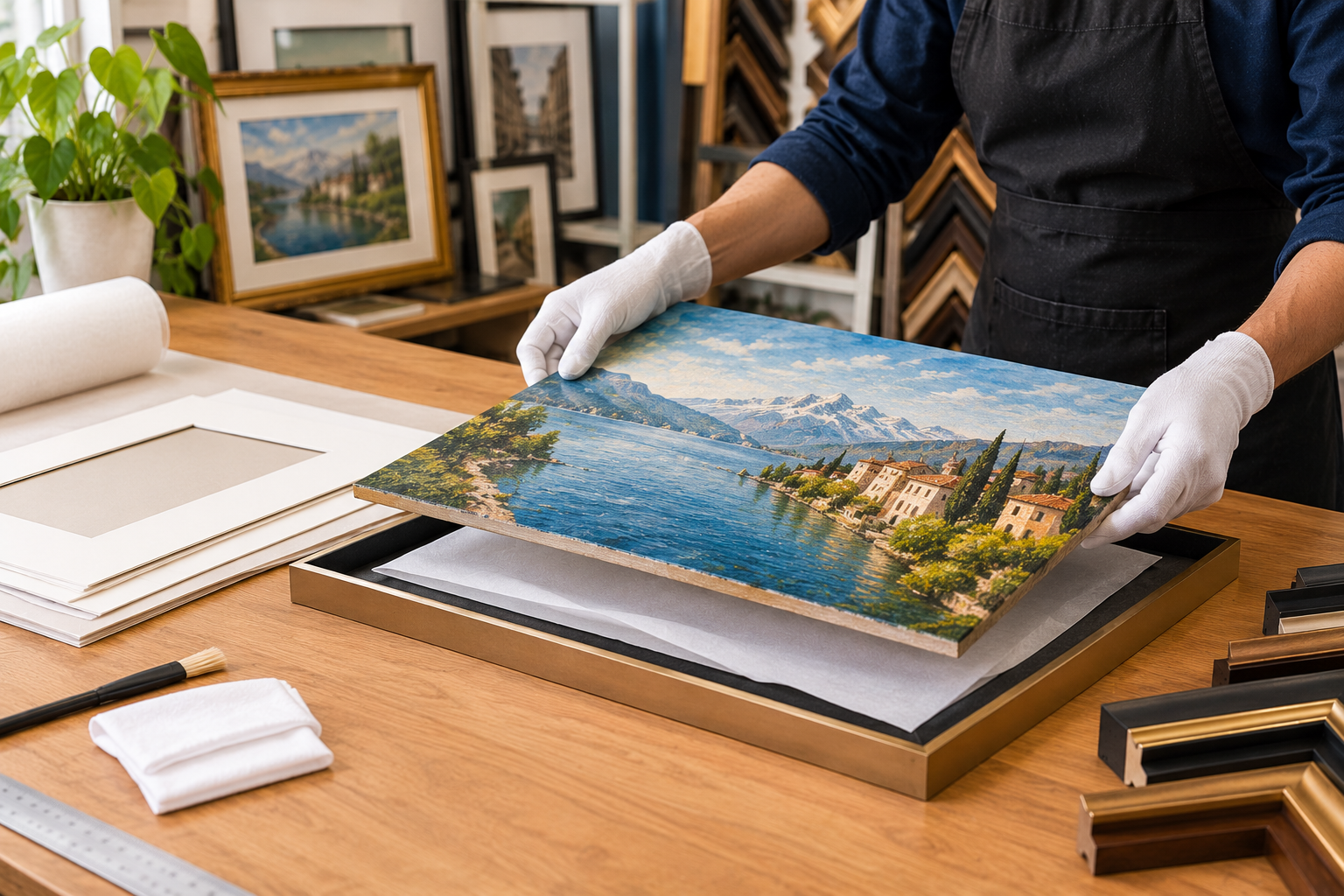
To frame a painting without damaging it, use only acid-free, archival materials, keep glass and tape away from the paint surface, mount the artwork with reversible hinges or a floater system, and seal the back against dust and moisture. In a hot, humid city, professional art framing in Dubai adds UV-filtering glazing and climate-aware backing so the painting stays stable for decades.
That short answer hides a lot of detail, and the details are where most framing mistakes begin. Whether you own a family oil painting, a watercolour bought at a gallery or a canvas you painted yourself, the wrong adhesive, mat board or glazing can cause yellowing, mould, warping or paint loss. Much of that damage is slow, hard to notice and often impossible to reverse.
Why paintings get damaged during framing
Most framing damage starts quietly. Knowing the common causes helps you spot a risky shortcut before it costs you a valuable piece.
• Acidic materials. Ordinary cardboard, wood-pulp mat board and cheap backing release acids that migrate into paper and canvas, leaving brown stains and brittle fibres.
• Glazing that touches the artwork. When glass or acrylic sits directly on paint, pastel or charcoal, moisture can get trapped and the surface may stick, lift or transfer.
• Tape and glue. Masking tape, sticky tape and spray adhesives bond permanently and leave stains that spread over the years.
• Over-tight fitting. Forcing a stretched canvas or panel into a snug rebate stresses the paint layer, which can crack as the materials expand and contract.
• Light exposure. Ultraviolet light fades pigments and yellows paper. It is the most common reason framed art loses colour.
• Poor sealing. Gaps at the back let in dust, insects and humid air.
How to frame a painting safely, step by step
1. Assess the artwork first. Identify the medium: oil or acrylic on canvas, watercolour or gouache on paper, pastel, or mixed media. The medium decides the glazing, the mounting method and whether a mat is needed. Note any flaking, tears or old repairs, and do not try to fix them before framing.
2. Prepare a clean workspace. Use a clean, flat table, wash and dry your hands or wear cotton gloves, and never touch the paint surface. Keep food and drink well away.
3. Choose archival mounting. Works on paper should hang from their top edge on hinges made of Japanese tissue and wheat starch paste, a reversible method used in museums. Corner pockets are another safe option. Avoid tape of any kind.
4. Add a mat or spacer. An acid-free mat board lifts paper artwork away from the glazing. Where no mat is wanted, hidden spacers in the rebate create the same protective air gap.
5. Select protective glazing. UV-filtering glass or acrylic slows fading. Oil and acrylic paintings on canvas are often framed without glazing, using a floater frame that shows the edges of the canvas with a small visible gap.
6. Leave room to move. The artwork should sit in the rebate with a few millimetres of breathing space, held by flexible clips or offset fasteners rather than forced into place.
7. Seal the back. Add an acid-free backing board, then a dust cover sealed to the frame. Fit hanging hardware rated for the full weight of the finished piece.
8. Hang it in the right spot. Keep the frame out of direct sunlight and away from kitchens, bathrooms and air-conditioning vents.
Conservation materials that protect your painting
The materials around a painting matter as much as the frame itself. This table shows what to ask for and what to avoid.
|
Component |
Safe choice |
Avoid |
|
Mat board |
Acid-free, lignin-free conservation or museum-grade board |
Standard wood-pulp board that yellows and turns acidic |
|
Glazing |
UV-filtering glass or acrylic, anti-reflective if the room is bright |
Plain glass in a sunny room |
|
Mounting |
Japanese tissue hinges with wheat starch paste, or corner pockets |
Sticky tape, spray glue, permanent dry mounting |
|
Backing |
Acid-free foam core or archival board |
Corrugated cardboard |
|
Frame |
Solid wood or aluminium, properly finished and sealed |
Untreated wood that absorbs moisture |
|
Fixings |
Flexible clips and offset fasteners |
Rigid fixings pressed hard against the artwork |
Glass or acrylic? Glass resists scratches and feels premium, but it is heavy and can shatter. Acrylic is lighter and safer for large works and for shipping, yet it attracts static, so it is a poor choice for pastel or charcoal unless it is an anti-static grade. A good framer will recommend one based on the size, medium and location of your piece, not on price alone.
Art framing in Dubai: heat, humidity and strong light
Dubai's environment is tougher on framed art than many people expect. Summer temperatures regularly pass 40°C, coastal humidity can climb very high, and sunlight is intense year-round. Indoors, air conditioning cools rooms quickly, and the temperature swings can create condensation behind glass if a frame is poorly sealed.
That is why local experience in art framing in Dubai makes a real difference. To protect a painting here:
• Choose UV-filtering glazing, especially for pieces facing windows.
• Ask for a sealed, moisture-resistant backing and a proper dust cover.
• Keep an air gap between artwork and glazing with a mat or spacer.
• Avoid hanging art on external walls, over air-conditioning vents or opposite large windows.
• Let artwork that arrives from abroad settle indoors for a few days before it is framed.
• Dust frames gently with a dry, soft cloth, and never spray cleaner onto the glass.
Custom framing in Dubai and online art framing
Ready-made frames suit standard sizes, but paintings rarely arrive in standard sizes. Custom framing in Dubai is the safer route when your piece is valuable or sentimental, has an unusual size, sits on a deep canvas, mixes media or belongs to a matching set. A custom frame is built around the artwork, with the right depth, mat, glazing and mounting, instead of forcing the artwork to fit the frame.
Online art framing makes that process far easier. With online custom framing in Dubai, you can choose the frame profile, colour, mat and glazing from home, preview the result and have the finished piece delivered. A good online art framing service should offer:
1. Clear guidance on measuring, so the frame fits the first time.
2. Archival, acid-free mats and backing as standard options.
3. UV-filtering glazing choices suited to Dubai's light.
4. Protective packaging for safe delivery.
5. Support from people who understand fine art, not only décor.
How to measure a painting. Measure height and width in millimetres at the widest points, and record the depth of any stretched canvas. Photograph the front and back, and note whether you want the edges visible or covered.
Before you order online artframing in Dubai, check the materials list: the frame should protect the painting first and decorate the wall second.
Common framing mistakes to avoid
• Using tape or glue on the artwork. It is the single most damaging shortcut, and it is almost never reversible.
• Pressing a painting against glass. Always leave an air gap, or leave oil and acrylic canvases unglazed.
• Picking a frame for décor only. Style matters, but depth, weight and materials must suit the piece.
• Skipping UV protection. Fading may take years to notice, and it cannot be undone.
• Cleaning a painting yourself. Household cleaners can lift paint or varnish. Ask a conservator.
• Framing straight away. New oil paintings need time to cure, so ask the artist or a framer how long to wait.
• Hanging in the wrong place. Humid bathrooms, kitchens and sunny walls shorten the life of any frame.
Choosing the right partner for art framing in Dubai
PickFrames.com brings art framing in Dubai online, so you can explore custom frames, mats and glazing options from your own screen and order a frame made for your artwork. Whether you need a single frame for a family portrait or a full set for an office or gallery wall, the principle stays the same: protect the painting first, then make it look beautiful.
Framing a painting without damaging it comes down to a few habits. Use acid-free materials, avoid adhesives, keep the artwork off the glazing, filter the light, seal the back and respect Dubai's climate. Follow them, and your painting will look as good in twenty years as it does today. Ready to begin? Explore custom framing at PickFrames.com.
Frequently asked questions
How do I frame a painting without damaging it?
Use acid-free mats and backing, mount works on paper with reversible hinges instead of tape, keep glazing from touching the surface, add UV-filtering glass or acrylic, and seal the back. Professional art framing in Dubai follows these steps as standard.
Should an oil painting be framed under glass?
Usually not. Oil and acrylic paintings on canvas are normally displayed without glazing, often in a floater frame. Works on paper, pastels and watercolours do need glazing and a mat.
What is the best glazing for art framing in Dubai?
UV-filtering glass or acrylic is the best choice because of Dubai's strong sunlight. Glass resists scratches, while acrylic is lighter and safer for large pieces. Use anti-static acrylic for pastel or charcoal.
How much does custom framing in Dubai cost?
Prices depend on size, frame material, mat, glazing type and how complex the mounting is. Compare quotes by materials, not just price, and confirm that mats, backing and glazing are archival grade.
Can I order online custom framing in Dubai for a valuable painting?
Yes, if the service explains its materials, offers archival options and packs the finished piece securely. Measure carefully, share clear photos and ask questions before you order.