
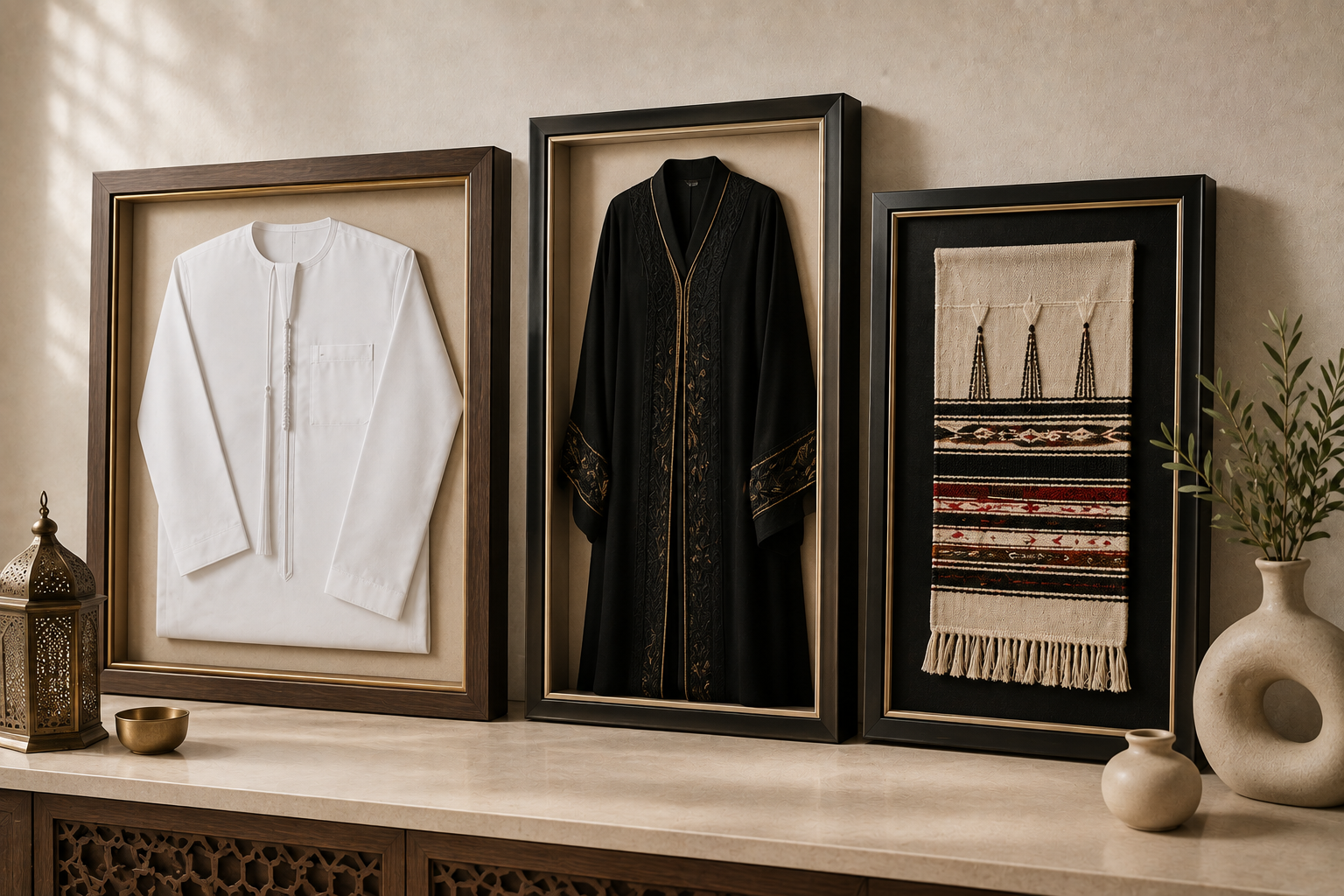
The best way to frame a kandura, abaya, or heritage textile is a custom shadow box frame, deep enough to hold the fabric without flattening it, using acid-free mounting board and fabric-safe pins rather than glue or staples. Add UV-protective glass to preserve embroidery colors, and choose a frame depth based on the fabric's thickness — a folded bisht needs more depth than a flat textile swatch.
Some pieces of fabric carry more than thread and stitching. A father's kandura worn at every Eid. An abaya passed down with hand embroidery no machine could replicate today. A piece of sadu weaving bought from a heritage market that somehow still smells faintly of the souq. These aren't things you fold into a drawer and forget — they deserve to be seen, and preserved, properly.
Framing traditional UAE textiles is different from framing a photo or a print. Fabric moves, breathes, and reacts to handling in ways paper doesn't, which means the framing method matters just as much as the frame itself. Here's exactly how to do it right, whether you're framing a kandura, an abaya, or any piece of fabric art worth keeping on display.
Why Textiles Need a Different Framing Approach
A standard flat frame — glass pressed close against a photo — works because paper is thin and rigid. Fabric is neither. Embroidered abayas have raised stitching that would be crushed under flat glass. A kandura has natural folds and volume that a shallow frame simply can't accommodate. And unlike a printed photo, textiles are usually irreplaceable — there's no reprinting a hand-embroidered heirloom if the mounting process damages it.
This is why textiles are almost always framed using a shadow box frame rather than a standard flat frame — the extra depth protects the fabric's texture while still allowing it to be fully displayed behind glass.
Step-by-Step: How Textile Framing Works
1. Choose the Right Shadow Box Depth
Depth is the first decision, and it depends entirely on the item. A flat textile swatch or a piece of sadu weaving may only need a standard shadow box frame. A folded kandura or bisht needs a deeper custom shadow box — sometimes several inches — so the fabric isn't compressed against the glass.
2. Mount Without Glue or Staples
This is the step most DIY attempts get wrong. Adhesives can stain or degrade fabric over time, and staples can tear delicate embroidery or weakened heirloom fibers. Professional textile framing uses fabric-safe pins, stitched mounting points, or tension mounting on an acid-free board — methods that hold the fabric securely without ever puncturing or bonding it permanently.
3. Use Acid-Free, Archival Materials Throughout
Everything touching the fabric — the backing board, the spacers, any mat — should be acid-free. Standard cardboard backing can yellow and chemically react with fabric over years, which is especially damaging for antique or heirloom textiles that can't be replaced.
4. Add UV-Protective Glass
Embroidery thread, particularly metallic or brightly dyed thread common in traditional UAE textiles, fades faster under UV exposure than most people expect. UV-protective glass or acrylic glazing preserves the vibrancy of embroidery and fabric dye far longer than standard glass, especially important for pieces displayed near windows in bright UAE interiors.
5. Let the Fabric Breathe
Unlike a photo, fabric benefits from a small air gap rather than being sealed completely airtight, which reduces the risk of trapped moisture affecting natural fibers over time. This is one of the reasons professional shadow box construction differs from a standard sealed picture frame.
Framing Guide by Textile Type
|
Item |
Best Framing Method |
Mounting Tip |
|
Kandura (worn/heirloom) |
Deep shadow box frame |
Pin-mount on acid-free board; avoid glue or adhesive |
|
Abaya with embroidery |
Shadow box with fabric-safe spacers |
Use UV glass to protect embroidery thread color |
|
Bisht (formal cloak) |
Extra-deep custom shadow box |
Fold minimally; support heavy fabric with a rigid backing |
|
Fabric swatches / textile art |
Standard shadow box or float frame |
Float-mount on linen backing for a gallery look |
|
Sadu weaving / heritage textile |
Wide shadow box frame |
Stretch gently, secure edges with fabric-safe pins, not staples |
Displaying Framed Textiles at Home
A framed kandura or abaya makes a striking centerpiece on its own, but many UAE households incorporate framed textiles into a broader gallery wall alongside family photo frames, framed art, and personalized picture frames — mixing heritage pieces with modern décor. Because textile shadow boxes tend to be heavier and deeper than standard frames, use sturdy wall anchors rated for the extra weight, and avoid hanging directly above heat sources or in constant direct sunlight, even with UV glass installed.
Gifting a Framed Textile
Framed textiles have become a popular, deeply personal gift for weddings, milestone birthdays, and family celebrations — a beautifully mounted piece of a grandmother's abaya fabric, for instance, carries far more meaning than a generic gift. If you're framing a textile as a gift, a personalized nameplate or small engraved plate on the shadow box adds a thoughtful finishing touch.
This kind of gift works especially well for milestones tied to tradition — a newlywed couple receiving a framed piece of a family kandura, or a grandparent gifted a shadow box holding fabric from their own wedding attire decades earlier. Because the piece is one-of-a-kind, it tends to become a permanent fixture in the recipient's home rather than something that gets put away.
DIY vs Professional Textile Framing
It's possible to attempt textile framing at home, but the risk profile is different from framing a print or photo. A mistake with a printed photo means reprinting it. A mistake with an heirloom kandura or a decades-old abaya can mean permanent damage to something that cannot be replaced at any price.
Professional framers working with fabric typically have experience judging fabric weight and fragility, choosing the right pinning technique for delicate versus sturdy fabric, and sourcing shadow box depths that aren't always available off-the-shelf. For a textile with genuine sentimental or heritage value, the small added cost of professional custom framing services is usually worth the peace of mind — particularly compared to the cost of an irreversible mistake.
That said, for a modern fabric art piece bought purely for décor rather than sentimental value, a well-researched DIY approach using acid-free materials and a pre-made deep shadow box frame can work reasonably well, as long as the core rules — no glue, no staples, no direct adhesive contact — are followed carefully.
Common Mistakes to Avoid
• Using a standard flat frame instead of a shadow box, which crushes texture and embroidery
• Gluing or ironing fabric flat before framing — this can permanently damage delicate or antique textiles
• Skipping UV glass, leading to faster fading of embroidery and dye
• Using non-archival backing board, which can yellow and chemically affect the fabric over time
• Choosing a shadow box that's too shallow for the fabric's natural volume
Frequently Asked Questions
What is the best way to frame a kandura?
A deep custom shadow box frame is best for a kandura, using acid-free mounting board and fabric-safe pins rather than glue. The extra depth accommodates the fabric's natural folds without crushing them.
Can you frame an abaya with embroidery without damaging it?
Yes, using a shadow box frame with fabric-safe mounting and UV-protective glass. This protects the embroidery's texture and thread color without using adhesives or staples that could damage delicate stitching.
How deep should a shadow box be for a folded garment?
It depends on the garment's thickness — a flat textile may need only a standard shadow box, while a folded kandura or bisht often needs several inches of depth to avoid compressing the fabric against the glass.
Is it safe to frame an old or heirloom textile?
Yes, when framed correctly with archival, acid-free materials and non-damaging mounting methods like pinning rather than gluing. This is actually one of the safest long-term ways to preserve and display a fragile heirloom textile.
Do framed textiles need special glass?
UV-protective glass or acrylic glazing is strongly recommended for framed textiles, since embroidery thread and fabric dye fade faster under UV light than most printed materials.
If you have a meaningful textile worth preserving, working with a custom framing service experienced in fabric mounting is the safest way to ensure it is protected for generations, not simply displayed for a season.
Visit Pickframes.com — Preserve Your Heritage. Frame Your Story.