
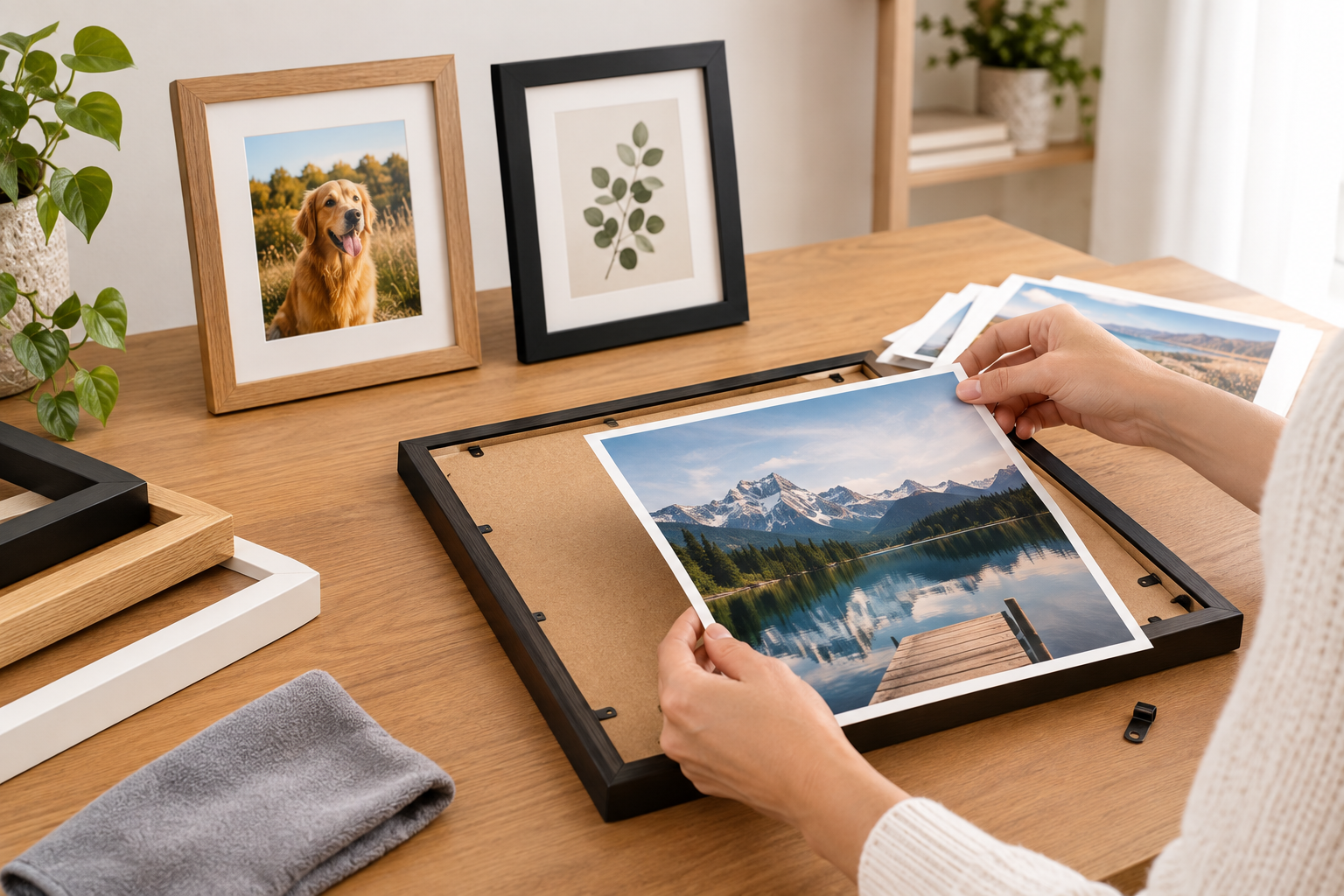
Yes, photos can be framed without glass. If safety around kids or pets is the concern, acrylic glazing is the best swap — same protection, shatter-resistant. If glare is the issue, canvas printing or anti-glare acrylic solves it completely. If weight or shipping is the concern, canvas or float-mount framing is lightest. Online photo framing in Dubai typically offers all of these as standard checkout options alongside traditional glass.
This question usually shows up for one of three reasons: a toddler or a boisterous dog is a genuine risk to anything breakable, a frame keeps catching glare under downlights no matter where it's moved, or a large piece needs to travel and glass simply adds too much risk and weight. Whatever brought you here, the short answer is yes — and the longer answer is that which option is right depends entirely on which of those three reasons is yours.
Rather than listing every alternative and letting you sort it out, this guide starts from your actual reason for asking and points you toward the option that fits it, with real cost differences and room-by-room recommendations along the way.
Start Here: Why Are You Asking?
These three questions cover almost every reason someone searches for glass-free framing. Find yours.
Q1. Are you worried about breakage around kids or pets?
Acrylic glazing is your answer. It looks and functions like glass, including UV-protective options, but is roughly half the weight and genuinely shatter-resistant. You lose almost nothing compared to glass except a slightly higher price and a bit more care when cleaning.
Q2. Is glare the actual problem, not breakage?
Canvas printing removes glare entirely, since there's no glazing at all. If you want to keep a more traditional framed look, anti-glare acrylic or anti-glare glass both cut reflection significantly without switching materials entirely.
Q3. Is this about weight, shipping, or hanging hardware limits?
Canvas or float-mount framing is lightest by a wide margin, since there's no glazing layer at all. This matters most for oversized pieces, rental walls with lighter hanging hardware, or anything being shipped or delivered.
A Few Myths Worth Clearing Up
A lot of hesitation around glass-free framing comes from assumptions that don't hold up once you look closer. Before settling on an option, it's worth checking whether any of these are quietly steering your decision.
|
MYTH Without glass, a photo has no protection at all. |
REALITY Acrylic glazing offers essentially the same protection as glass, including UV filtering. Only fully open-face or float-mount framing skips protective covering entirely — canvas and acrylic both still protect the piece. |
|
MYTH Acrylic looks cheap compared to real glass. |
REALITY Quality acrylic is visually near-indistinguishable from glass once framed — most people can't tell the difference at a normal viewing distance without touching it. |
|
MYTH Canvas printing is only for large statement art, not personal photos. |
REALITY Canvas works well for family photos too, particularly ones you want glare-free on a well-lit wall — it's a style choice as much as a size one. |
|
MYTH Glass-free framing is a modern trend, not a practical long-term choice. |
REALITY Acrylic glazing has been used in museums and archival framing for decades specifically because it's lighter and more durable to transport than glass — it's a practical standard, not a passing style. |
What It Actually Costs to Go Glass-Free
|
Glazing Type |
Typical Price Impact |
Best Reason to Choose It |
|
Standard glass |
Baseline |
Budget-friendly, fine for low-risk spaces |
|
Anti-glare glass |
+15 – 30% |
Reduces reflection, keeps traditional look |
|
Acrylic (standard) |
+10 – 25% |
Lighter, shatter-resistant |
|
Acrylic (UV + anti-glare) |
+25 – 45% |
Full protection without glass risk |
|
Canvas printing (no glazing) |
Varies by size |
No glare, lightest option, distinct finish |
Percentages are relative to an equivalent standard glass order — always confirm the exact total at checkout.
Quick Match: Room Type to Glazing Choice
• Kids' rooms and playrooms — acrylic glazing, ideally UV-protective for daytime light
• Living rooms with large windows — canvas printing or anti-glare acrylic, both cut reflection from natural light
• Hallways and stairwells — acrylic for durability against accidental knocks in a high-traffic space
• Studies and quiet display walls — standard or anti-glare glass is fine, since risk and glare are both lower here
• Rental homes or frequently-moved pieces — canvas or acrylic, both far more forgiving than glass in transit
One Thing Worth Knowing Before You Decide
Acrylic scratches more easily than glass if wiped with the wrong cloth — a rough paper towel or an abrasive cleaner can leave fine marks over time that glass would shrug off. It's a minor trade-off given the safety benefit, but worth knowing upfront: a microfibre cloth and an acrylic-safe cleaner keep it looking new indefinitely, while anything abrasive will eventually show.
The other small consideration is static — acrylic can attract dust slightly more than glass, particularly in dry, air-conditioned interiors. A quick wipe every few weeks with the right cloth keeps this from becoming noticeable, and it's a minor trade-off against not worrying about breakage at all.
Ordering Glass-Free Online Custom Framing
A properly built online photo framing checkout treats glazing type as a straightforward choice, not a special request. Pickframes lists standard glass, acrylic, and canvas printing side by side during ordering, so switching away from glass takes one click rather than a separate conversation.
1. Identify your actual reason — breakage risk, glare, or weight — using the questions above
2. Choose the matching glazing option: acrylic, canvas, or anti-glare glass
3. Select frame material and size as usual
4. Add UV protection if the piece will hang in natural light
5. Confirm your price and order your online photo frames for delivery across Dubai and the UAE
Frequently Asked Questions
What should I use instead of glass for photo framing?
Acrylic glazing is the closest substitute, offering similar protection and clarity to glass while being lighter and shatter-resistant. Canvas printing is the best choice if you want no glazing at all.
Is acrylic as protective as glass for framed photos?
Yes, quality acrylic offers comparable protection to glass, including UV-filtering options. The main trade-off is that it scratches more easily than glass if cleaned with an abrasive cloth.
Does removing glass save money on custom framing?
Not always — acrylic can cost slightly more than standard glass, while canvas printing costs vary by size. The main benefit of going glass-free is safety, glare reduction, or weight, not necessarily cost savings.
Can I choose acrylic instead of glass when ordering online photo framing in Dubai?
Yes. Most online custom framing checkouts list glazing type as a standard selectable option, so choosing acrylic or canvas over glass is straightforward during ordering.
Which glass-free option is best for reducing glare specifically?
Canvas printing eliminates glare completely, since there's no glazing at all. Anti-glare acrylic or anti-glare glass are good middle-ground options if you want to keep a more traditional framed look.
Does acrylic yellow or discolour over time like some plastics?
Quality UV-protective acrylic used for framing is formulated to resist yellowing far better than generic plastic, and typically stays clear for many years under normal indoor conditions.
The right glass-free option isn't the same for everyone, because the reasons for asking aren't the same. Match the option to your actual problem — breakage, glare, or weight — rather than picking whichever alternative sounds most popular, and online photo framing makes switching away from standard glass a simple checkout choice either way.
Whichever reason brought you here, the good news is the same: this isn't a compromise you have to accept or avoid entirely. It's a genuine choice with a right answer for your specific situation, and now you know which question to ask yourself before you order.