
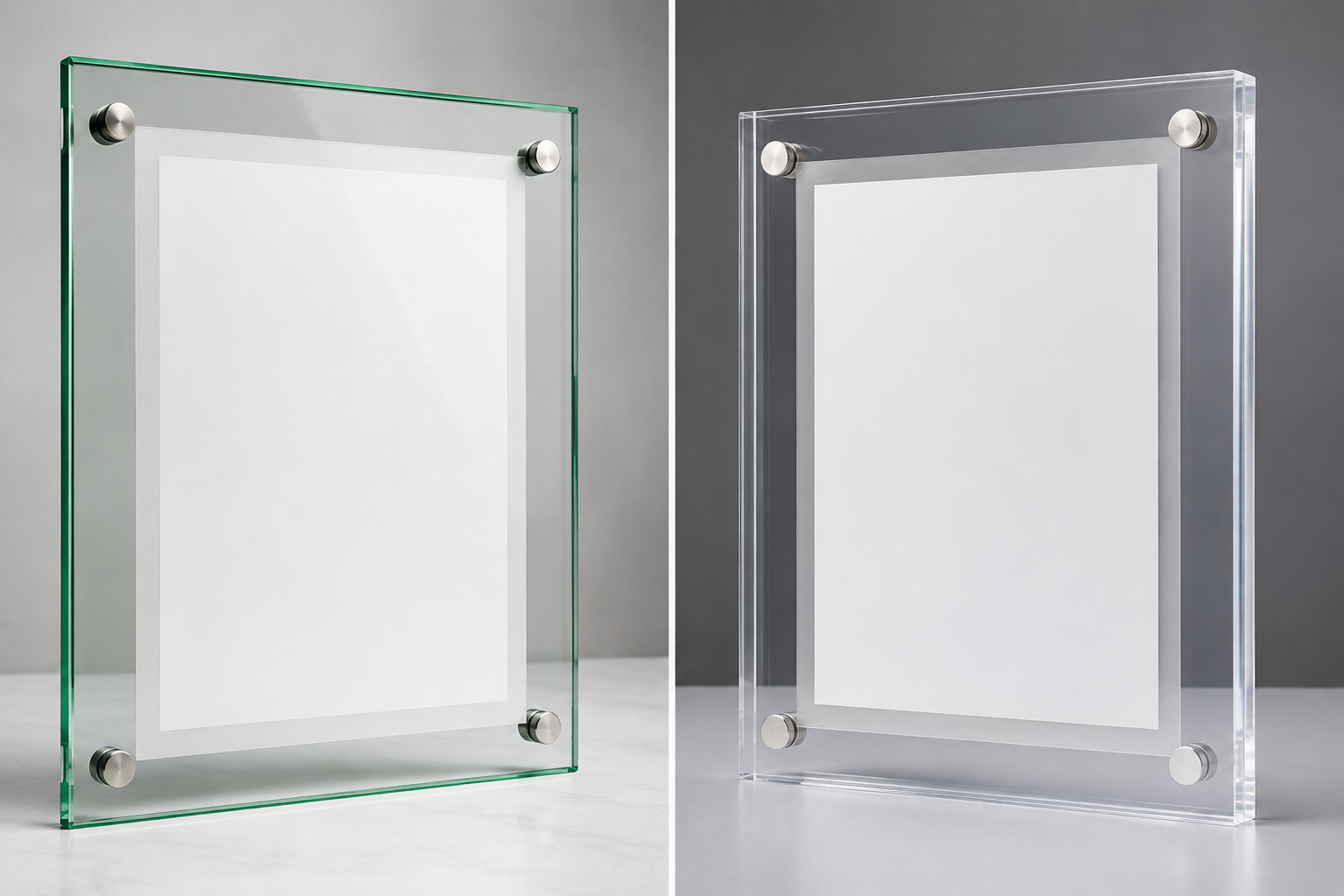
Acrylic glass generally protects prints better for most home and office use — it's lighter, shatter-resistant, and most modern acrylic options include the same UV-filtering coating as premium art glass, at a lower shipping and handling risk. Art glass wins on scratch resistance and optical clarity for high-value or gallery-grade prints that won't be moved often. For a standard custom frame ordered through online framing in Dubai, acrylic is usually the safer, more practical default; for museum-grade or investment pieces, art glass with UV coating is worth the extra cost.
Every custom frame order eventually hits the same fork in the road: glass or acrylic? Most people skip past this question entirely, assuming glazing is glazing — a clear cover that keeps dust off the print and nothing more. That assumption costs people money and, occasionally, a ruined print. The glazing yo u choose affects how much your photo fades over the next decade, whether your frame survives a fall off the wall, how much it weighs when you're hanging it, and what it costs you upfront. This is a genuine competition with a real winner depending on what you're framing — so let's run it like one.
The Contenders
Art glass is what most people picture when they think “picture framing glass” — a genuine glass sheet, sometimes treated with anti-reflective or UV-filtering coatings for higher-end framing. It's the traditional choice, and it's still the standard in most gallery and museum framing.
Acrylic glass (also called acrylic glazing or plexiglass in framing contexts) is a rigid, optically clear plastic sheet used as a glass substitute. It's newer to mainstream framing than glass but has become the default in many modern custom frames, especially for larger pieces.
Neither is objectively “better” in every category — which is exactly why this needs to go round by round instead of a simple verdict.
Why This Decision Gets Skipped So Often
Most custom frame buyers never actually see this choice presented clearly. Many providers default to whichever glazing is cheaper for them to stock, and the checkout page simply says “glass” or shows no option at all. That's a missed decision point, not a non-issue — the glazing you end up with affects your print for as long as it hangs on the wall, often far longer than the frame style or mat color you spent time picking out. If you've ever ordered a custom frame and weren't asked about glazing at all, there's a good chance you got whatever was cheapest to source that week, not necessarily what best suited your print.
Round 1: Clarity and Visual Quality
Standard art glass has a slight green tint when viewed from the edge and can show visible reflections under bright light. Standard acrylic is nearly reflection-free by comparison and has better light transmission out of the box — but premium art glass with anti-reflective coating actually edges out standard acrylic in true color accuracy for very high-end prints, since coated glass doesn't have the faint optical distortion that lower-grade acrylic sometimes shows at larger sizes.
Round winner: Tie, leaning acrylic for standard glazing, leaning art glass for premium anti-reflective coated glass.
Round 2: UV Protection and Fading Prevention
This is the round that actually matters most for protecting your print long-term. Uncoated glass and uncoated acrylic both block minimal UV light — around 30-45%, which sounds like something but isn't nearly enough to prevent fading over years of light exposure. UV-filtering coatings are available for both materials and block 98%+ of UV rays. The difference is availability and consistency: UV-filtering acrylic is now the standard offering at most picture framing service providers, while UV-coated art glass is usually an upgrade you have to specifically request and pay more for.
Round winner: Acrylic, mainly because UV protection is far more likely to be included by default rather than something you have to remember to ask for.
Round 3: Weight and Handling Safety
Acrylic weighs roughly half what glass does at the same size. For a small tabletop frame, this barely matters. For large canvas wall art or an oversized statement piece, it matters enormously — a large glass-glazed frame is genuinely heavy, harder to hang safely, and far more dangerous if it ever falls. Acrylic's lighter weight also makes shipping safer and cheaper, which is directly relevant if you're ordering custom frames through online framing rather than picking up in person.
Round winner: Acrylic, decisively, for anything above a small-to-medium size.
Round 4: Breakage and Shatter Resistance
Glass shatters into sharp shards when it breaks. Acrylic doesn't shatter the same way — it can crack or scratch, but it doesn't produce dangerous glass fragments. This matters for frames hung in homes with children or pets, in hallways where a frame might get knocked, or for anything shipped via courier, where handling damage is always a risk.
Round winner: Acrylic, especially relevant for anyone ordering through a custom frame shop near me in Dubai and having it delivered rather than hand-carried.
Round 5: Scratch Resistance
Here's where glass finally takes a clear round. Standard acrylic scratches more easily than glass — a stray fingernail, an over-enthusiastic cleaning cloth, or a pet's paw can leave a visible mark on acrylic that simple glass would shrug off. Scratch-resistant acrylic coatings exist but cost more and aren't universal across providers.
Round winner: Art glass, clearly, unless you're specifically paying for scratch-resistant acrylic.
Round 6: Cost
Standard, uncoated glass is typically the cheapest glazing option. Standard acrylic costs slightly more than basic glass but less than UV-coated art glass. Premium UV-filtering, anti-reflective art glass is consistently the most expensive option across the board.
Round winner: Art glass (basic/uncoated only) — but once you factor in that most people actually want UV protection, acrylic usually ends up the better value since UV filtering is bundled in as standard rather than a costly upgrade.
Final Scorecard
|
Round |
Winner |
Why |
|
Clarity |
Tie |
Acrylic clearer by default; coated art glass wins at the high end |
|
UV protection |
Acrylic |
UV filtering more often included as standard |
|
Weight & handling |
Acrylic |
Roughly half the weight of glass |
|
Breakage safety |
Acrylic |
Doesn't shatter into sharp fragments |
|
Scratch resistance |
Art glass |
Naturally more scratch-resistant |
|
Cost (with UV protection) |
Acrylic |
UV filtering bundled in, not a costly add-on |
Overall: Acrylic wins for most everyday framing. Art glass remains the right call for a smaller, deliberately fragile, rarely-moved, high-value piece where scratch resistance and top-tier optical clarity matter more than weight or shatter risk.
Which Should You Choose? A Practical Guide
Choose acrylic if: you're framing anything large, ordering through online framing for delivery, hanging the piece somewhere it could get bumped, or framing something for a home with kids or pets. This covers the large majority of standard custom photo frames and large canvas wall art orders.
Choose art glass if: you're framing a small, valuable original artwork or document that will stay in one place, where scratch resistance and absolute optical clarity outweigh the benefits of lighter weight and shatter resistance — think a signed print in a study, not a canvas piece in a busy hallway.
Always choose UV-filtering on either material if the frame will hang anywhere near natural light. This single upgrade does more to protect your print's long-term appearance than the glass-vs-acrylic decision itself.
A quick self-check: picture where the piece will actually hang. Near a window with direct afternoon sun, in a hallway kids run through, shipped to a family member in another city — each of those scenarios points toward acrylic with UV filtering almost automatically. A quiet, low-traffic study wall with indirect light only is the scenario where art glass's extra scratch resistance and clarity genuinely pay off.
What Glazing Costs in Dubai and the UAE
• Standard uncoated glass: typically the lowest-cost glazing option, included by default with most basic custom frames
• Standard UV-filtering acrylic: modest upgrade over basic glass, often bundled as standard with mid-range framing
• Premium UV-filtering, anti-reflective art glass: the highest-cost option, generally reserved for gallery-grade or investment pieces
Pricing varies meaningfully between providers, so when comparing picture framing prices, always confirm exactly which glazing tier is included by default versus offered as a paid upgrade — this is where quotes that look similar on the surface can differ significantly once glazing is factored in.
Ordering the Right Glazing Through Online Framing in Dubai
Most custom framing dubai providers now let you select glazing type directly during the online framing checkout process, alongside frame material and size. If you're comparing a custom frame shop near me against an online option, ask both the same three questions: is UV filtering standard or an upgrade, is the acrylic scratch-resistant or standard-grade, and what's the size cutoff where they recommend switching from glass to acrylic for safety reasons. A good picture framing service, whether in Dubai, Abu Dhabi, or Sharjah, should be able to answer all three without hesitation — if they can't, that's a sign to look elsewhere.
Final Verdict
For the vast majority of custom picture frames ordered today — photos, prints, certificates, everyday framed art — acrylic glazing with UV filtering is the safer, more practical, and often more cost-effective choice, especially for anything ordered online and shipped. Art glass still earns its place for smaller, high-value, rarely-disturbed pieces where its scratch resistance and clarity genuinely matter more than weight or breakage risk. The right answer isn't universal — it depends on what you're protecting and where it's going to hang.
Frequently Asked Questions
1. Is acrylic glass or art glass better for protecting a print from fading?
Both offer similar protection when UV-filtering coatings are applied, but acrylic more commonly includes UV filtering as a standard feature, while UV-coated art glass is usually a separate, costlier upgrade.
2. Is acrylic glazing safer than glass for picture frames?
Yes, generally. Acrylic weighs about half as much as glass and doesn't shatter into sharp fragments if the frame is dropped or knocked, making it a safer choice for large pieces, shipped orders, and homes with children or pets.
3. Does acrylic scratch more easily than glass?
Yes. Standard acrylic is more prone to surface scratches than glass, though scratch-resistant acrylic coatings are available at a higher cost for pieces that will be handled or cleaned frequently.
4. Which glazing option costs more, glass or acrylic?
Basic uncoated glass is typically the cheapest option, but once UV filtering is factored in, acrylic often works out more cost-effective since UV protection is commonly included as standard rather than a paid upgrade.
5. Can I choose my glazing type when ordering custom frames online in Dubai?
Yes. Most online framing providers in Dubai let you select glazing type — standard glass, UV-filtering acrylic, or premium art glass — directly during checkout alongside frame size and material.